




1-855-602-7447
Experts available 7 days a week!

Cruises From Santa Cruz de La Palma, Spain
and so much more


Hotels & Resort Deals
Select a destination...
 View All Hotels & Resort Deals
Vacation Interests
Miscellaneous

Tours By Type




Tour Deals
Select a destination...
 View All Tour Deals
Cruises From
Vacation Interests
Career Discounts
Featured Destinations
Select a destination for info and deals...
Destination Ports
Cruises sailing in each region...

- Transfer Your Booking To Us
- Book Shore Excursions
- Book Land Tours
- Save on Passport & Visa Services
-
![Arrow]() View All Customer Service Resources
Saving Tools
- Access Reservation (web-made bookings only)
- Make a Payment
- Add Travel Insurance
- Pre-Cruise Registration
For Existing Reservations
- Land Vacation FAQs
- Cruise FAQs
- Cruise Port Directions
- Contact Us
Useful Links
Cruises From Santa Cruz de La Palma, Spain
Check out our Cruises to Santa Cruz de La Palma, Spain page if you’re not looking to cruise from Santa Cruz de La Palma, Spain.
Search Deals
Cruise Search
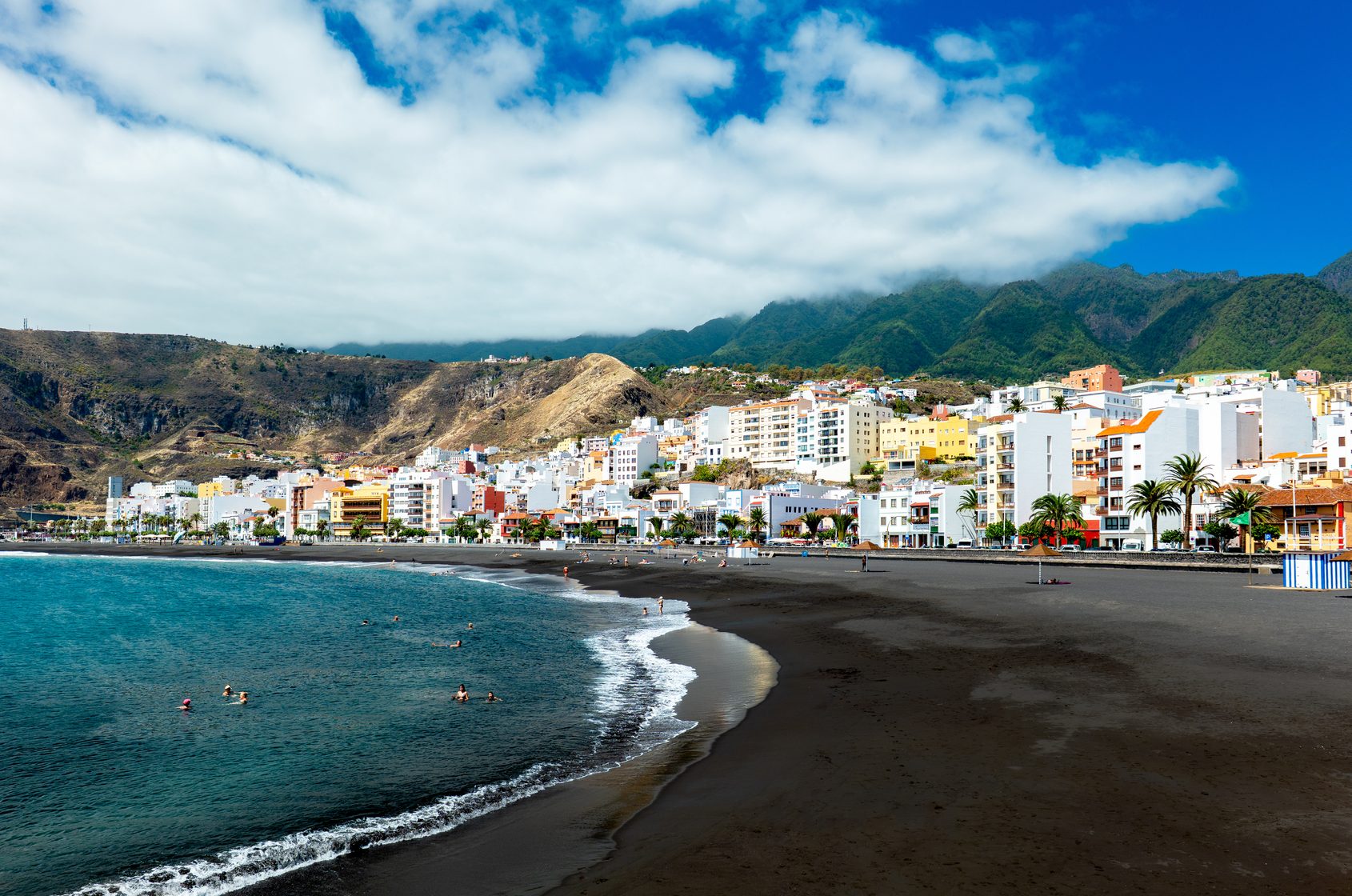
Santa Cruz de La Palma, Spain Highlights
Santa Cruz de La Palma
The white town of Santa Cruz de La Palma and its black sand beach below the green mountains of La Palma.
Featured Cruises from Santa Cruz de La Palma, Spain
Overview Overview
Destinations Regions
Destination Calendar Calendar
Cruise Lines Lines
Attractions Sights
Weather Weather
Santa Cruz de La Palma, Spain
La Palma is the northwestern Canary Island nicknamed "La Isla Bonita," a steep volcanic island of about 84,000 people whose capital, Santa Cruz de La Palma, faces the Atlantic on its east coast. Founded in 1493, the town served as a port on the routes to the Americas, and its cobbled main street, historic squares and wooden balconies still show it. Inland, the island rises to about 7,960 feet (2,426 m) at the rim of the Caldera de Taburiente, a national park since 1954, where some of the world's leading telescopes take advantage of exceptionally clear skies.
Do cruise ships dock in La Palma? Yes. Ships tie up in the port of Santa Cruz de La Palma, the island's only major port. How far is the port from the town center? Spain's official tourism site puts it at less than 1 km, so Calle Real, the Plaza de Espana and the seafront balconies are a short walk from the ship.
Cruises to La Palma are part of Canary Islands and Western Europe itineraries. MSC calls most often by a wide margin, followed by Costa, CroisiEurope, Windstar and Cunard, with Regent Seven Seas, Ponant and Silversea also visiting. Some MSC Canary Islands cruises start or end here, so passengers can board or leave the ship in Santa Cruz.
The town makes an easy half day on foot. For the island's mountain scenery, the Caldera and the observatory are reached by road into the interior, so book a tour or a taxi and allow plenty of time for the return.
American Discount Vacations is proud to offer the best deals possible on all cruises from Santa Cruz de La Palma, Spain. Backed by our "Low Price Guarantee," and powered by our team of expert travel agents, we're sure to exceed your expectations when booking your next cruise departing from Santa Cruz de La Palma, Spain!
Destinations for Cruises from Santa Cruz de La Palma, Spain
The following cruise destinations can be visited on a cruise from Santa Cruz de La Palma, Spain. Select a destination to view the upcoming cruises that are available:

Destination Calendar
Make a selection below to view the cruises available during that month in that destination.

Pricing listed above is per person, based on double occupancy in the least expensive accommodations available, is subject to change, and may not reflect the most recent pricing (as pricing gets updated throughout the day). Prices include Required Cruise Fees & Expenses, as well as Government Taxes & Fees. Prices may not reflect discounts and special promotions that you may qualify for. Go to the Category selection step of the online booking process to view the live pricing and latest offers.
Cruise Lines with Cruises from Santa Cruz de La Palma, Spain
The following cruise lines feature cruises leaving from Santa Cruz de La Palma, Spain. Select a cruise line to view upcoming cruises that they're offering from Santa Cruz de La Palma, Spain:
Filters:
SHOW ALL
mainstream


Things to do in Santa Cruz de La Palma, Spain
A colonial port town at the pier, a giant volcanic caldera and some of the best stargazing skies in the Northern Hemisphere. Here are the best things to do in La Palma on a cruise day:
♦ Calle Real and Plaza de Espana
The town's mostly cobbled main street runs through the historic center past shops, squares and historic buildings to the Plaza de Espana, where locals meet. The square holds the town hall and the Church of El Salvador, founded in 1500, and it is the heart of a walk that starts just a few minutes from the ship.
♦ The Balconies of Avenida Maritima
Along the seafront avenue, a row of traditional Canarian houses carries wooden balconies decorated with brightly colored flowers. They are a highlight of any walk along the waterfront.
♦ Caldera de Taburiente National Park
The island's north is dominated by this immense basin, about 6 miles (10 km) across, with walls that rise as much as 6,500 feet (2,000 m) above its floor. A national park since 1954, it is covered in Canary Island pine forest and was the last stronghold of the island's native people against the Spanish conquest. Its high rim is reached by road.
♦ Roque de los Muchachos
The island's highest point, at 7,960 feet (2,426 m) on the rim of the caldera, is home to the Roque de los Muchachos Observatory, one of the best sites for astronomy in the Northern Hemisphere. Its telescopes include the Gran Telescopio Canarias, among the largest optical telescopes in the world, and clouds that form well below the summit usually leave the sky above it clear.
♦ Naval Museum and Plaza de la Alameda
At one end of the Plaza de la Alameda, the Naval Museum recalls the town's seafaring past. Nearby are the walls of the Castillo de Santa Catalina, one of the forts built to defend the port from pirates and corsairs.
♦ The Volcanoes of the South
The southern half of La Palma is the Cumbre Vieja, a ridge of volcanic cones that is still active. It last erupted in 2021, destroying more than 2,600 buildings, after earlier eruptions in 1949 and 1971, and the ridge runs south to the island's tip at Punta de Fuencaliente.
Average Monthly Weather for Santa Cruz de La Palma, Spain
Temperature
Average monthly high and low temperatures. Values are in Fahrenheit (switch to Celsius):
Precipitation
Total per month. Values are in inches (switch to millimeters):
Days of precipitation per month:
The information above is provided for informational purposes only. Monthly statistics are based on the most recent instance of that month. Weather is subject to change and cannot be guaranteed. The data is provided by a third-party and we accept no liability regarding its accuracy.