



1-855-602-7447
Experts available 7 days a week!



Hotels & Resort Deals
Select a destination...
 View All Hotels & Resort Deals
Vacation Interests
Miscellaneous
Tours By Type
Tour Deals
Select a destination...
 View All Tour Deals
Cruises From
Vacation Interests
Career Discounts
Featured Destinations
Select a destination for info and deals...
Destination Ports
Cruises sailing in each region...
- Transfer Your Booking To Us
- Book Shore Excursions
- Book Land Tours
- Save on Passport & Visa Services
-
![Arrow]() View All Customer Service Resources
View All Customer Service Resources
Saving Tools
- Access Reservation (web-made bookings only)
- Make a Payment
- Add Travel Insurance
- Pre-Cruise Registration
For Existing Reservations
- Land Vacation FAQs
- Cruise FAQs
- Cruise Port Directions
- Contact Us
Useful Links

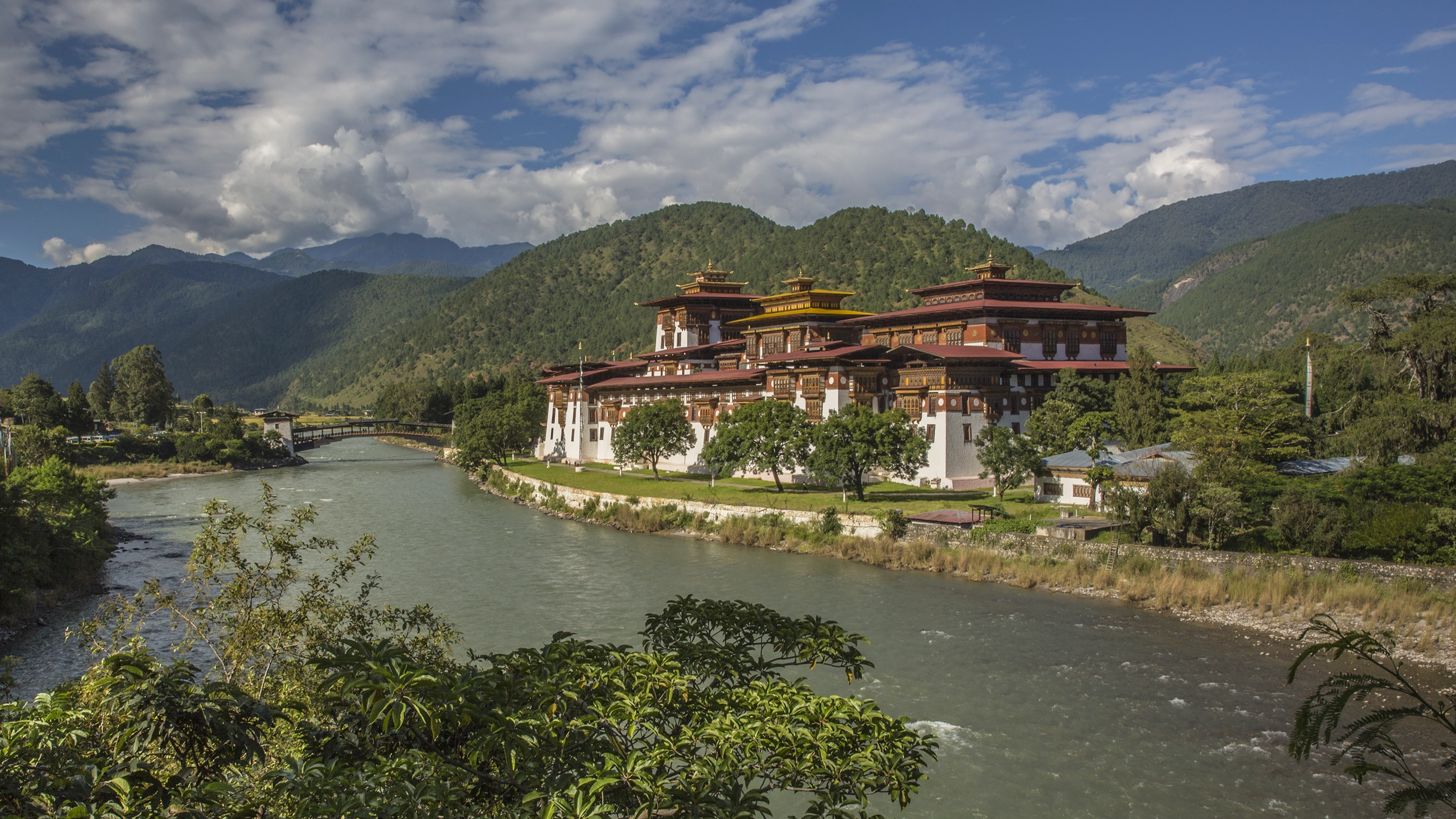
Journeys: Discover India, Nepal & Bhutan

-
Length
26 Days
-
Quality
This indicates the overall quality of the tour operator's products. A low rating does not mean it is not good - it just means that it does not include as much, or perhaps is of a more standard quality than the higher quality tours. For example, a 3 star quality rating means that it is a more standard/economical tour, while 5 stars is a very luxurious tour that often includes a lot of amenities. -
Starts in
Delhi (India)
-
Ends in
Paro (Bhutan)
-
Available Tour Start Dates
OCT 22, 2028 to NOV 16, 2028
-
Activity Level
Moderate
-
Style
Fully-Guided
-
Guaranteed Date(s)
Yes means that there is at least one tour date that the vendor guarantees will occur. No means that there is not at least one tour date that the vendor guarantees will occur, which usually means that the vendor wants a certain amount of reservations on each tour in order for each one to occur. Of course, the terms and conditions of the vendor do allow for the vendor to cancel guaranteed tour dates for certain reasons (for example, a natural disaster).Yes
-
Special Interest(s)
National Geographic
Greater exploration, insider access, and the freedom to roam - all without sacrificing comfort., Small GroupGroup trips average 12 travellers per departure, depending on the adventure. The maximum is usually no more than 16, but some can be smaller or bigger, depending on the trip. Check individual trips for details.
From
Pricing listed is per person, based on double occupancy, and is the least expensive price for at least one departure date of this tour. Price is for the tour only. Additional items, including but not limited to, airfare (unless noted otherwise), travel insurance, and more, are additional.
$9,799.00
Contact Us for a Special Price!
Overview
Travel from Delhi's bustling streets through Nepal's high valleys into Bhutan's quiet mountains. Stand before the sunrise-lit Taj Mahal, shape momos with local families in Kathmandu, and talk philosophy with Buddhist monks in Thimphu. Climb mossy forest trails to the cliffside Tiger's Nest Monastery, entering a world where progress is measured in contentment, and every landscape carries a story.
Visited During Tour
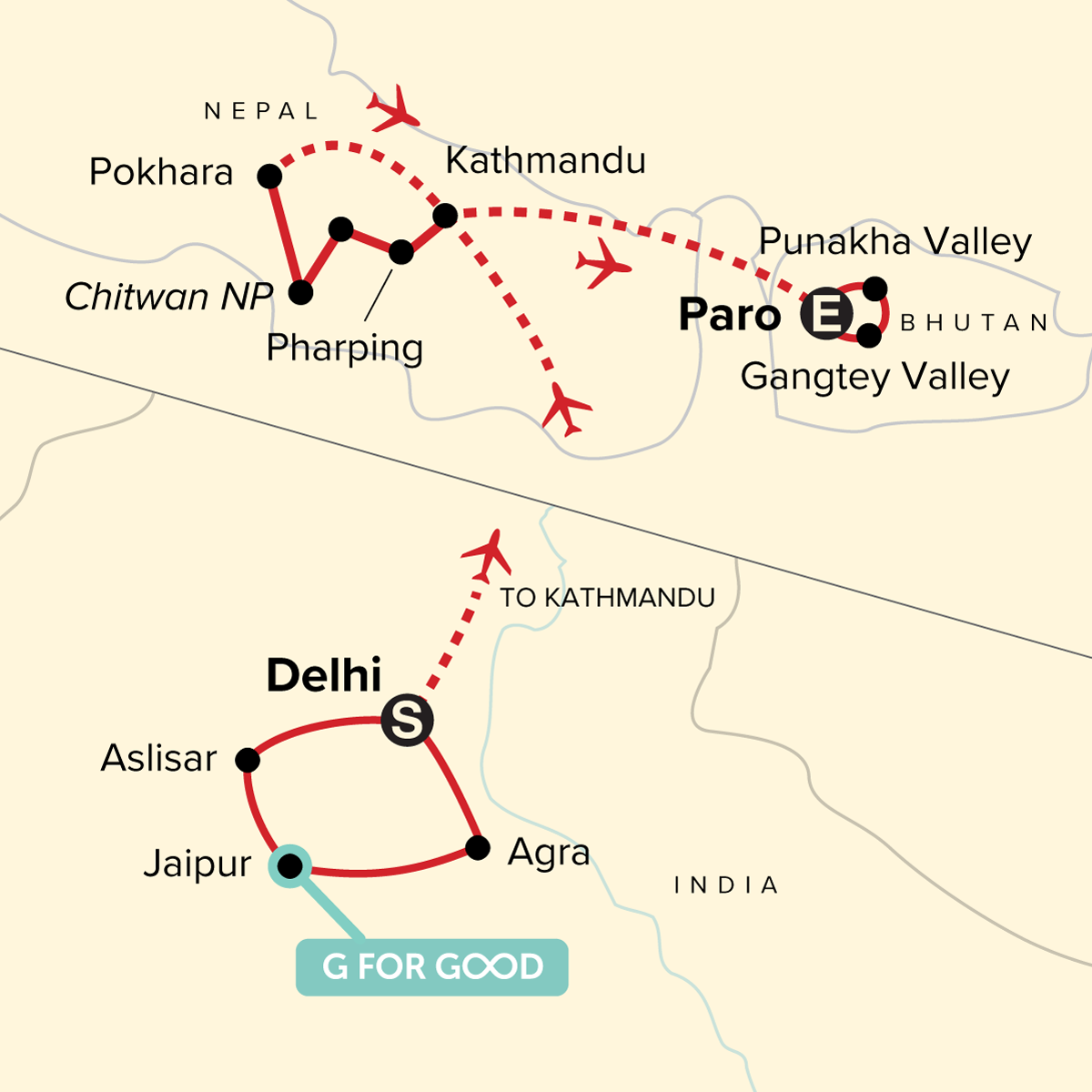
Agra (India) | Alsisar (India) | Chitwan National Park (Nepal) | Delhi (India) | Gangtey Gonpa (Bhutan) | Haa Dzongkhag (Bhutan) | Jaipur (India) | Kathmandu (Nepal) | Kurintar (Nepal) | Paro (Bhutan) | Pharping (Nepal) | Pokhara (Nepal) | Punakha (Bhutan) | Thimphu (Bhutan)
Dates, Offers & Prices
Tour Itinerary
Accommodations
More Details
Dates, Offers & Prices
The following are Journeys: Discover India, Nepal & Bhutan tour dates available from G Adventures. Select a bonus offer graphic to view its details, including its terms.


Tour Itinerary
G Adventures Tour Code AHKNG-11943
-
Day
1Delhi
Arrive at any time; your arrival transfer is included through Women With Wheels, a G Adventures-supported project.
There are no planned activities until an evening welcome meeting, so check into to the hotel and enjoy the city. We highly recommend booking a pre-night in Delhi to get over your jetlag and be ready for this very busy trip.
Exclusive Inclusions:
Women With Wheels
Transfer by a G Adventures-supported project, Women With Wheels. This program provides safe and reliable transport for travellers, while providing a dignified livelihood for local women who once lacked financial opportunities.
Welcome Moment - Meet Your Expedition Leader and Group
Your opportunity to meet your National Geographic Expedition Leader and fellow travellers, and learn more about your tour. Opt to join the group for a local meal afterwards. Don't forget to see the notice in the lobby (or ask reception) for the official time and place to meet up with the group.
Accommodations: Bloom Hotel - GK2 -
Day
2DELHI/AGRA
Set out to discover Delhi, the capital of India, which consists of two cities: historic Delhi and New Delhi, built by the British in the early 20th century. Explore New Delhi's lively Paharganj district with a youth guide from the G Adventures-supported City Walk project, and hear about how the program provides opportunities to disadvantaged street youth. Then delve into the narrow, winding lanes of Old Delhi, visiting the 17th-century Jama Masjid-the largest mosque in India-and the Sikh temple Gurdwara Sis Ganj Sahib, located close to a busy shopping area. Drive to Agra this afternoon.
- Meals Included:
- Breakfast
Exclusive Inclusions:
Delhi City Walk
Explore the streets of Delhi with a youth-led tour guide from the G Adventures-supported City Walk project. As a former at-risk youth, your local guide will have a unique perspective on the city and can provide more information on the life of a child in India. The guided tour helps support the guide's college or university tuition.
Old Delhi Guided Walk
Visit historic Old Delhi. Explore Jama Masjid, the "Great Mosque," and enjoy its massive courtyard, which can hold up to 25,000 worshippers. Also, visit the ancient Sikh temple of Gurdwara SisGanj, which was established in 1783.
Private Vehicle
Settle in and scan the scenery from the convenience of a private vehicle.
Accommodations: The Retreat Hotel -
Day
3AGRA
Spend the day in historic Agra, which served as the capital of the Delhi sultanate and later of the Mughal Empire. Discover the Taj Mahal, one of the New Seven Wonders of the World; widely considered the finest example of Mughal architecture, this breathtaking mausoleum was built by the emperor Shah Jahan for his favourite wife, Mumtaz Mahal. Afterward, visit the exquisite tomb of Mumtaz Mahal's grandfather, often referred to as the "baby Taj," and explore Agra Fort, an impressive red sandstone citadel which conceals palaces of white marble within.
- Meals Included:
- Breakfast
Exclusive Inclusions:
Taj Mahal Visit
Cross one off your bucket list as you visit one of the Seven Wonders of the World. Explore the gorgeous white marble mausoleum, built by the Mughal Emperor Shah Jahan as a testament of his love for his favorite wife, Mumtaz Mahal.
Baby Taj Visit
Visit this mausoleum that looks like a jewel box, built before the Taj Mahal by Queen Nur Jahan for her father. Enjoy the intricate details of the structure; it was the first Mughal building faced with white marble and where "pietra dura" (precious stones inlaid into marble) was first used.
Agra Fort Visit
Enjoy a visit to this impressive Mughal fort made of red sandstone and white marble.
Accommodations: The Retreat Hotel -
Day
4AGRA/JAIPUR
Travel to Jaipur, the capital of the state of Rajasthan. On the way, stop at the magnificent Mughal city of Fatehpur Sikri, a masterpiece of red sandstone, and hear about its fascinating history. The emperor Akbar built a short-lived capital here in the 16th century to honour a Muslim saint from the village of Sikri who had predicted the birth of his son, Jehangir. Then visit the Rajasthani village of Abhaneri for a walk around the Chand Baori-an ornately decorated stepwell or water tank constructed over a thousand years ago-learning about ancient Indian methods of water conservation. Before arriving to your hotel, visit the Anoothi Project, a collective of women from a marginalised community outside Jaipur who have mastered the traditionally-male technique of block printing. Travelers will engage in a hands-on block printing experience and spend time with the women leading this experience to speak with them about the purpose of the collective and its impact on the community.
- Meals Included:
- Breakfast
Exclusive Inclusions:
Private Vehicle
Settle in and scan the scenery from the convenience of a private vehicle.
Fatehpur Sikri Visit
Explore the magnificent red sandstone fort city that was once the capital of India's Mughal Empire and is a UNESCO World Heritage site. Keep an eye out for elements of different religions, as King Akbar built three palaces for each of his favourite wives-a Hindu, a Muslim, and a Christian-in the city.
Abhaneri Stepwell Visit
Walk around the amazing Chand Baori, a tenth century water tank that's an impressive 30m (100 ft) deep. Learn about ancient Indian environmentalism-a "baori" is a unique Indian invention for harvesting rainwater.
Accommodations: Khandela Haveli -
Day
5Jaipur
Explore Jaipur, known as the "Pink City" for its rose-coloured buildings. Take a tour of the sprawling Amber Fort, the former residence of Jaipur's Rajput rulers; and visit Hawa Mahal, or the Palace of Winds, a stunning five-story sandstone building with distinctive honeycombed windows. The next stop in Jaipur today is at Anoothi. Here, you'll discover the artistry of traditional block printing while supporting a meaningful local women's initiative. Tonight, consider going to the cinema to watch a Bollywood movie-a truly unique experience.
Going to see a Bollywood film in India is much more than what we are accustomed to in the west. The atmosphere, energy, and pure fun (not to mention volume!) has to be experienced to be believed.
- Meals Included:
- Breakfast
Exclusive Inclusions:
Amber Fort Visit
Take in the Hindu and Muslim architecture of the beautiful Amber Fort. Wander through the halls and courtyards and admire the intricate details.
City Palace Visit
Explore the courtyards, gardens, and buildings that make up the City Palace. Located in the heart of the Old City, it is a striking blend of Mughal and Rajasthani architecture. Visit the palace's museum to look at ancient carriages and the former maharaja's gold-embroidered wedding outfit.
Anoothi Block Printing Experience
Women from marginalised communities outside Jaipur came together to create the Anoothi Project. In Hindi, Anoothi means 'unique and extraordinary' and by teaching these women to master the traditionally male handicraft of block printing, the collective shines a light on the unique and extraordinary within each individual. At this G for Good visit, engage in a hands-on block printing activity with the local women as you indulge in some local snacks prepared by your hosts.
Accommodations: Khandela Haveli2Optional Activities for Day 5
Show -
Day
6Jaipur/Alsisar
Start your day with a local historian and sociology scholar, diving into India's intricate social fabric-from its ancient belief systems to its iconic architecture. Afterward, travel into rural Rajasthan and join your Expedition Leader to explore Alsisar, a village famed for its stunning heritage havelis (mansions). The evening concludes with dinner at our own haveli accommodations.
- Meals Included:
- Breakfast
- Dinner
Exclusive Inclusions:
Beyond the Pink City
In Jaipur, known as the "Pink City," meet with a local historian and sociology scholar to learn about India's complex social fabric and traditions, and discuss a range of topics from the country's belief systems to its architecture.
Private Vehicle
Settle in and scan the scenery from the convenience of a private vehicle.
Local Village Immersion
Step back in time and explore the traditional village of Alsisar to get a glimpse of life in rural India. Topics of discussion along the way can include how urbanization affect village life, information technology, and modernization in its benefits and disadvantages, as well as simple village customs and traditions.
Accommodations: Pachewar Garh Fort -
Day
7Alsisar/Delhi
Drive back to bustling Delhi. After checking into the hotel, enjoy the rest of the day free to explore the city. This evening, opt to join the group for a farewell dinner.
- Meals Included:
- Breakfast
Exclusive Inclusions:
Private Vehicle
Settle in and scan the scenery from the convenience of a private vehicle.
Accommodations: Bloom Hotel - GK2 -
Day
8Delhi/Kathmandu
Transfer to the airport and catch a flight to Kathmandu, the capital of Nepal. After our welcome meeting, experience a sound bath wellness demonstration and enjoy a six-course dinner featuring organic Nepali cuisine.
- Meals Included:
- Breakfast
- Dinner
Exclusive Inclusions:
Plane
Look! Up in the sky! It's a bird! It's a plane! It's... yup, it is a plane, actually.
Welcome Meeting for Travellers on Combos
You may be a seasoned pro at group travel by now, but there will likely be some new travellers joining the group. Sit in on the welcome meeting to meet the newest members of your group and learn about the next leg of your tour.
Nepalese Welcome Experience at Avata Wellness
Enjoy an immersive and meditative full body and mind wellness experience during a sound bath demonstration at Avata Wellness in Kathmandu. Since ancient times, people have been using sound to heal and wash away mental distress. It may even help with the jet lag from a long flight to Nepal so you can begin your adventure feeling refreshed. Brass singing bowls will be used during the session to create a comforting and meditative atmosphere. Afterwards, a six-course vegetarian meal will be served at Nourish by Avata. All dishes are prepared using traditional Nepali herbs and spices, a perfect blend of delicacies that will introduce you to the many different flavours of Nepal.
Accommodations: The Malla Hotel -
Day
9Kathmandu
Spend the day exploring Kathmandu, the colourful capital of this Himalayan nation. Pay a visit to Bodhnath Stupa, the holiest Tibetan Buddhist shrine outside of Tibet, and explore the wood-carved temples, pagodas, and palaces of Bhaktapur, Nepal's medieval capital.
- Meals Included:
- Breakfast
- Lunch
Exclusive Inclusions:
Private Vehicle
Settle in and scan the scenery from the convenience of a private vehicle.
Bodhnath Stupa Visit
Enjoy a visit to the Bodhnath Stupa, one of the largest Buddhist stupas in the world. Built in the 5th century, this UNESCO World Heritage site still attracts many pilgrims, particularly Tibetan Buddhists and local Nepalis. Take in the peaceful atmosphere and observe Buddhist monks in prayer in the monasteries surrounding the stupa.
Bhaktapur Excursion
Visit this unique old town known as the City of Devotees. Explore Hindu temples, pagodas, palaces, and monuments, including the beautiful wood-carved palace in Durbar Square. You can pick up clay pots and other souvenirs in the colourful open markets and taste home made yogurt, known as khopa dhau, which Bhaktapur is famous for.
Accommodations: The Malla Hotel1Optional Activities for Day 9
Show -
Day
10Kathmandu/Pharping
Venture to the ancient hilltop temple of Swayambhunath, decorated with vibrant prayer flags and home to troops of rhesus monkeys. Later, we'll hear about National Geographic Grantee Chhing Lhomi's efforts to preserve the weaving traditions of the Upper Mustang region through her work with the Himalayan Indigenous Society, a Kathmandu-based nonprofit. Then depart for nearby Pharping, known for its Buddhist pilgrimage sites, and settle into a tranquil monastery guesthouse for the night. Get an insider's view of monastery life, and enjoy a chanting and prayer service; or opt to take a walk in the monastery's peaceful grounds. Enjoy a cooking demonstration at local community restaurant and learn how to make Nepalese momos (dumplings). Afterwards, taste your delicious creations.
Experience the serenity of a Tibetan Buddhist monastery. The monastery guest house offers comfortable accommodations in a peaceful setting with balconies and private western-style bathrooms. There are approximately 200 monks in residence following the Nyingmapa tradition. This is a new monastery (2006), and income from the guest house directly supports it.
Please note that on select departures, the itinerary may be re-ordered to have the Monastery visit at the end of the itinerary.
- Meals Included:
- Breakfast
- Lunch
Exclusive Inclusions:
Swayambhunath Temple Visit
Visit Swayambhunath Buddhist temple and Unesco World Heritage Site, the most ancient and enigmatic of all the holy shrines in Kathmandu. Explore the structure and be sure to check out the Buddha's eyes painted on each side of the Stupa. The site is also known as the monkey temple, for the vast amount of creatures who call the complex home.
Stories from the Himalayas
In Kathmandu, National Geographic grantee Chhing Lhomi works to preserve the ancient traditions of the Lowa community of the Upper Mustang region. We'll take the unique opportunity to visit a local home of a family from this region and enjoy a lecture from Chhing or one of her colleagues on traditional weaving methods, and hear about ongoing efforts with the Himalyan Indigenous Society.
Private Vehicle
Settle in and scan the scenery from the convenience of a private vehicle.
Overnight at a Buddhist Monastery
Experience the serenity of a Buddhist monastery. The monastery guest house offers comfortable accommodations in a peaceful setting with balconies and private western-style bathrooms. Opt to participate in the life of the monks: take tea alongside them and enjoy the early morning chanting before experiencing the sunrise from the roof of this stunning monastery. There are approximately 200 young monks in residence, training in the Nyingmapa tradition. This is a new monastery (2006), and income from the guesthouse directly supports it.
Nepalese Dumplings Cooking Demonstration
Enjoy a cooking demonstration at a local establishment and learn how to make momos (traditional dumplings). Afterwards, taste the delicious dishes made during a Nepali lunch.
Accommodations: Neydo Monastery Hotel -
Day
11Pharping/Kurintar
Rise at dawn to listen to the monks' morning chanting, and witness a stunning sunrise. Then drive to the small riverside village of Kurintar and hike to our lodge, nestled on a forested hill overlooking the Trishuli River. Opt to relax by the pool or take a guided walk through the surrounding countryside, stopping at local villages.
Arrive at our remote lodge, which sits on a ridge amidst the hills overlooking sandy beaches and a river. Forests cascade down the hillsides, enclosing tiny settlements of tribal people.
The lodge is only accessed by foot, so please expect a walk of approx. 30 to 45 minutes. Porters will be hired to carry our bags but please pack what you need for the night, as we will leave our larger bags in the vehicle.
- Meals Included:
- Breakfast
- Dinner
Exclusive Inclusions:
Neydo Monastery Sunrise Chant
Rise before sunrise and enter the main hall of the Monastery to listen to the monks practicing their chanting. After, we enjoy the sunrise over the Valley from the Monastery roof.
Private Vehicle
Settle in and scan the scenery from the convenience of a private vehicle.
Walking
Lace up your shoes and get to the next stop under your own power.
Accommodations: Summit River Lodge1Optional Activities for Day 11
Show -
Day
12Kurintar/Royal Chitwan National Park
Today, we travel towards Chitwan National Park, Nepal's oldest wildlife reserve and a UNESCO World Heritage site. The park is home to 68 recorded mammal species, including the one-horned rhino and the Bengal tiger, as well as hundreds of species of birds. Check in to our lodge, located on the banks of the East Rapti River. After lunch, board a traditional flat-bottomed boat for a river safari, keeping your eyes out for aquatic birds, crocodiles, and other riverine fauna.
Spend two nights enjoying cultural and wildlife excursions in and around Royal Chitwan National Park (RCNP), the oldest national park in Nepal. Established in 1973, it became a UNESCO World Heritage site in 1984. Within its area of 932km2 (579 mi2), RCNP is home to at least 43 species of mammals, 450 species of birds, and 45 species of amphibians and reptiles, including sambars, chitals, rhesus monkeys, tigers, and langurs.
The specifics and order of activities may change, depending on the season and local conditions. Your National Geographic Expedition Leader will confirm the exact activities and timing with the naturalists upon arrival at the lodge.
- Meals Included:
- Breakfast
- Lunch
- Dinner
Exclusive Inclusions:
Walking
Lace up your shoes and get to the next stop under your own power.
Private Vehicle
Settle in and scan the scenery from the convenience of a private vehicle.
Chitwan Area Boat Excursion
Embark in traditional patela boats on a silent trip down the Rapti River, which boarders the National Park to view aquatic birds, crocodiles, gharials, and the animals along the river banks.
Accommodations: Barahi Jungle Lodge -
Day
13Royal Chitwan National Park
Spend the day exploring Chitwan National Park on a variety of excursions; activities differ depending on the season. Set out on a jeep safari through the grasslands and forests, seeking out rhinos, leopards, elephants, monkeys, and the elusive Bengal tiger. Meet with a "tiger technician" from the Nepal Tiger Trust, a nonprofit dedicated to the protection and conservation of these majestic cats. Visit a farming village bordering the park for a glimpse of rural life, and return to our lodge this evening in time for a dance performance by the local Tharu people.
The jeep safari is often prohibited during monsoon season by the park authorities; monsoon season is from June-September, and sometimes it can last till October. When the park is inaccessible, we will search out wildlife in the surrounding forest which is unfenced and just as likely to view animals. Boating is also subject to the water levels and local conditions on the Rapti River.
- Meals Included:
- Breakfast
- Lunch
- Dinner
Exclusive Inclusions:
Jeep Safari
Enjoy a jeep safari that begins in open grassland and moves into the dense Sal Forest, crossing the Reu River to see different wildlife. Continue down to the banks of Narayani River and spot gharials (freshwater alligators) basking in the sun. Also, view wildlife from Bhimle Machan (a wooden platform).
Chitwan Village Visit
Enjoy a visit to the farming Village bordering the National Park. Learn about the social and cultural aspects of the village people, what they farm, and see how they live day-to-day.
Chitwan Tiger Experience
Nepal Tiger Trust is a nonprofit organization dedicated to the protection of tigers in Nepal and is run by researchers and local community volunteers. Their Tiger Corridors Project has been monitoring these amazing cats in Chitwan National Park and adjacent areas for over five years. On this experience, meet with a local tiger "technician" who will give a presentation about the work here and its importance to conservation, tourism, and the community at large. He or she will then join us on a jeep safari to teach us how tigers are tracked and monitored. If we're lucky, we'll catch a glimpse of an elusive tiger.
Accommodations: Barahi Jungle Lodge -
Day
14Royal Chitwan National Park/Pokhara
Drive to Pokhara, an enchanting town set on the shores of turquoise-hued Phewa Lake against a backdrop of snowcapped Himalayan peaks. Enjoy a guided walk around the city, and opt to have dinner at a popular local restaurant.
Nestled in a tranquil valley at an altitude of 827m (2,713 ft), beautiful Pokhara lies on a once vibrant trade route between India and Tibet. To this day, mule trains can be seen bringing goods to trade from remote regions of the Himalayas. This enchanting city has several beautiful lakes and offers stunning panoramic views of Himalayan peaks. It's a popular place to relax and enjoy the beauty of nature.
- Meals Included:
- Breakfast
Exclusive Inclusions:
Private Vehicle
Settle in and scan the scenery from the convenience of a private vehicle.
Pokhara Orientation Walk
Breathe in the fresh air and take in the views of the Himalayas and Phewa Lake while getting your bearings around this scenic city.
Accommodations: Temple Tree Resort & Spa -
Day
15Pokhara
Venture to Sarangkot village early this morning and hike to the famed Sarangkot lookout to witness a breathtaking sunrise over the Annapurna Himalaya. Back in Pokhara, climb up a lush forest path to the gleaming white Peace Pagoda, built by Japanese monks after World War II. Later, visit a Tibetan refugee settlement, established by the United Nations in 1964. Learn about the history of the community on a walk through their photo gallery, and enjoy a traditional Tibetan lunch. In your free time, opt to take a boat tour of Phewa Lake.
The hike up to the World Peace Pagoda can be quite strenuous and is all steps up and back down. If you are not feeling so energetic, please let the National Geographic Expedition Leader know and you can opt out of this activity.
- Meals Included:
- Breakfast
- Lunch
Exclusive Inclusions:
Sunrise at Sarangkot
Rise early and experience a spectacular sunrise with a panoramic view of the surrounding Himalayas. The highest altitude on this trek is at 1600 meters.
World Peace Pagoda Excursion
Walk up to the World Peace Pagoda, which was constructed by Buddhist monks. Enjoy the structure and the beautiful view around it.
Tibetan Refugee Settlement
Visit the Tashiling Tibetan Refugee Camp, established by the United Nations in 1964 as a temporary settlement for the large number of refugees fleeing Tibet. Walk through this friendly quarter, now home to over 500 people. Visit the celebrated photo gallery here and then enjoy a traditional momo lunch at the local restaurant to support this incredible community.
Accommodations: Temple Tree Resort & Spa1Optional Activities for Day 15
Show -
Day
16Pokhara/Kathmandu
Catch a flight back to the capital, Kathmandu. Enjoy time to shop in the bustling Thamel district, or choose to visit Pashupatinath Temple, the most sacred Hindu temple complex in Nepal.
Enjoy free time in the afternoon for exploring. Visit the burning ghats at Pashupatinath and Swayambhunath, or the monkey temple. Kathmandu is fascinating at every turn, and some travelers prefer to just wander, seeing where the city may lead them.
- Meals Included:
- Breakfast
Exclusive Inclusions:
Plane
Look! Up in the sky! It's a bird! It's a plane! It's... yup, it is a plane, actually.
Free Time
Take some time to explore on your own or do some last minute shopping.
Accommodations: The Malla Hotel1Optional Activities for Day 16
Show -
Day
17Kathmandu/Thimphu
Transfer to Kathmandu's airport for a flight past the world's highest peaks into Paro, Bhutan. Descend into Paro's emerald valley, where mountain air greets you at the steps of the plane. Clear customs, meet your guide, then travel along winding river roads to Thimphu, the only capital in the world without a single traffic light.
In clear weather, the flight over the Himalayas offers magnificent views of the world's highest peaks as they give way to the lush green Paro valley. The first gift from Bhutan will be the cool, clean fresh air as you step off the plane. After clearing customs and visa control, an arrival transfer will take you to Thimphu, where we'll be met by our local National Geographic Expedition Leader who will conduct a welcome meeting and orientation.
Approximate Altitude: Paro 2,300m
- Meals Included:
- Breakfast
- Dinner
Exclusive Inclusions:
Private Vehicle
Settle in and scan the scenery from the convenience of a private vehicle.
Welcome Meeting for Travellers on Combos
You may be a seasoned pro at group travel by now, but there will likely be some new travellers joining the group. Sit in on the welcome meeting to meet the newest members of your group and learn about the next leg of your tour.
Accommodations: The Capital Hotel -
Day
18THIMPHU/PUNAKHA
This morning, meet a Buddhist monk and scholar to discuss Buddhist beliefs and ways of life in Bhutan. Then drive to scenic Punakha, crossing the lofty Dochu La pass and enjoying stunning views of the Himalaya through flickering prayer flags. Settle into your hotel and drive to Lobesa after lunch. From here, hike up to Chimi Lhakhang, a 15th-century monastery dedicated to the Buddhist saint Drukpa Kunley, known as the "Divine Madman." Learn about his colourful, eccentric life, and witness women devotees who visit the monastery to receive blessings of fertility.
After breakfast, drive through dense forests of blue pine, oak, and rhododendrons and enjoy views of the Himalayan range and the valley beyond. After a lunch stop, the road climbs steeply through a forest of pine and cedar, festooned with hanging lichen high up near Dochula pass at 3,050m (10,007 ft). After stopping here for tea and panoramic views of the Himalayan mountain range, we descend along a series of hairpin bends to the fertile valley of Punakha.
Approx. Altitude: Punakha Valley 1,300m
- Meals Included:
- Breakfast
- Lunch
- Dinner
Exclusive Inclusions:
Private Vehicle
Settle in and scan the scenery from the convenience of a private vehicle.
Chimi Lhakhang Visit
Take a short hike to Chimi Lhakhang, temple of the "Divine Madman." Built in 1499, it is mainly visited today by women as it is known as the temple of fertility.
Stories from a Buddhist Scholar
Meet with a Buddhist monk and scholar in the scenic capital city of Thimphu. Hear him talk about his daily life and Buddhism in general, and gain insight into this tiny kingdom where happiness is the common goal.
Accommodations: Zen Punakha -
Day
19PUNAKHA
Enjoy a full day of exploration in Punakha, the old capital of Bhutan. Visit the magnificent Punakha Dzong, or fortress, situated at the confluence of two important rivers. Drive to the Sangchhen Dorji Lhuendrup nunnery, a meditation and training center for Buddhist nuns. Then drive to Wangdue Phodrang to discover the town's dzong. In the afternoon, weave your way through rice terraces and pine forests to Khamsum Yulley Namgyal Chorten, a cheerful temple perched on a picturesque mountain ridge overlooking the Punakha Valley.
- Meals Included:
- Breakfast
- Lunch
- Dinner
Exclusive Inclusions:
Private Vehicle
Enjoy the scenery of you private vehicle towards Pelela, where you will rejoin the Trans Bhutan Trail to hike the rest of the way to Chendebi.
Punakha Dzong Visit
Visit Punakha Dzong, the winter seat of the Je Khenpo and the Monk Body, remarkably located between the rivers of the Mo (female) Chu and Pho (male) Chu. It is the second oldest and second largest dzong (fortress) in Bhutan and one of its most majestic structures, housing many sacred relics. It is also the winter capital of the Je Khenpo (chief abbot). Built by Zhabdrung Ngawang Namgyal in around 1637. Arguably, it is the most beautiful Dzong in the country. The Dzong guards Bhutan's most treasured relic, the Rangjung Kharsapani, an image of Chenresig kept away from the public in the utse (tower). It has survived Tibetan invasions, numerous fires, floods and a glacial lake burst. The Dzong served as the capital and seat of the Bhutanese Government until the early 1950s; and the coronation of the His Majesty the First Druk, Gyalpo Ugyen Wangchuck, took place here.
Sangchhen Dorji Lhuendrup Nunnery
Enjoy a drive and visit to the Sangchhen Dorji Lhuendrup Nunnery and Temple complex. Perched on a ridge amid pine trees and overlooking the 3 Valleys of Toebesa, Punakha and Wangdi Phodrang, the complex is a meditation and traditional arts training center for nuns. Enjoy the peace and quiet and learn about the nunnery which was established by the Royal Grandfather.
Wangdue Phodrang Visit
Visit Wangdue, one of the major towns and district headquarters of Western Bhutan. We make a short stop here and visit the Wangdue Phodrang dzong.
Hike and Visit Khamsum Yueley Chorten
Cross the suspension bridge and then hike to Khamsum Yueley Chorten. Enjoy hike through rice terraces, farms, and deep pine forest until we reach the stupa, which was consecrated in December 1999. Take a moment to breathe and admire the view, it's superb.
Accommodations: Zen Punakha -
Day
20PUNAKHA/GANGTEY
Travel to the Gangtey Valley-also called Phobjikha Valley-the winter habitat of rare black-necked cranes. If your trip falls between October and February, you'll have a chance to visit the information center of the Royal So-ciety for Protection of Nature (RSPN) to learn about these graceful, vulnerable birds, which migrate from Tibet to Bhutan every year.
Approx. Altitude: Gangtey Valley 2,900m
- Meals Included:
- Breakfast
- Lunch
- Dinner
Exclusive Inclusions:
Private Vehicle
Settle in and scan the scenery from the convenience of a private vehicle.
Black-Necked Crane Centre Visit
Visit the Royal So-ciety for Protection of Nature's (RSPN) Black-Necked Crane Centre. Learn more about these birds and their environment. Please note that birds are in abundance only during the migration season, between October and February.
Accommodations: ABC Eco Lodge -
Day
21GANGTEY
Set out to discover the stunning Gangtey Goempa, one of the oldest Nyingma monasteries in Bhutan. This 17th-century temple recently underwent an elaborate renovation. Afterward, we'll walk across Phobjikha Valley to Khewa Valley, stopping at an old temple on the way to make an offering. This evening, explore Khewa village and enjoy a cooking demonstration and delicious home-cooked dinner at a family farmhouse.
- Meals Included:
- Breakfast
- Lunch
- Dinner
Exclusive Inclusions:
Private Vehicle
Settle in and scan the scenery from the convenience of a private vehicle.
Gangtey Goempa Monastery Visit
Enjoy a visit to the monastery of Gangtey Goempa, built in the 16th century and renovated and consecrated in 2008. Be sure to check out the amazing relics inside -- they're said to be the most sacred in all of Bhutan. The architectural design is impressive, too.
Phobjikha and Khewa Valley Hike
Enjoy a walk across Phobjikha Valley and into the Khewa Valley, where we visit an old temple and offer a (compulsory) donation - a necessity to keep the monastery running.
Khewa Village Visit
Enjoy a short visit to the rural village of Khewa, where their main production is potato farming and dairy products. Get a taste of Bhutanese village life.
Family Farm Meal
Visit a family farmhouse in Gangtey Valley for a cooking demonstration and traditional meal. As Bhutanese food is usually hot and spicy, we learn how to make ama datshi (chili cheese), one of the most popular dishes in Bhutanese cooking. Enjoy this simple but tasty meal and conversation with local people, who are always happy to welcome visitors.
Accommodations: ABC Eco Lodge -
Day
22GANGTEY/THIMPHU
Return to Thimpu and take in the golden splendour of the Buddha Dordenma, a massive Buddha statue that graces a hill overlooking the city. Visit the National Institute for Zorig Chusum, an arts and crafts school where we can watch students practicing traditional arts such as woodworking, painting, and ceramics. Later, enjoy a talk on Gross National Happiness, an index used by the Bhutanese to measure the nation's progress.
Please note that on occasion the Institute for Zorig Chusum art school is closed due to school breaks and holidays. If it is not open on the day of your visit, another activity will be arranged.
Approx. Altitude: Thimpu 2,300m
- Meals Included:
- Breakfast
- Lunch
- Dinner
Exclusive Inclusions:
Private Vehicle
Settle in and scan the scenery from the convenience of a private vehicle.
Buddha Point Visit
Buddha Point is home to Thimphu's most recognized landmark, the Buddha Dordenma. Guarding the entry to the Thimphu valley, this 51-meter (167ft) gilded bronze statue is filled with 125,000 miniature statues and sits atop a three-storey base housing a chapel and thousands of donated statuettes. The statue was commissioned to mark His Majesty the Fourth King of Bhutan, Jigme Singye Wangchuck's 60th birthday and was originally made in China before being transported to Thimphu in pieces. The massive Buddha statue in Thimphu made of bronze and gold. Take lots of pictures - it's beautiful!
Institute for Zorig Chusum Visit
Enjoy a visit to the Institute for Zorig Chusum, an arts and craft school that's a highlight for those interested in Asian art. The institute was established in 1971 to ensure the continuity of Bhutanese traditional arts. Students study here for 4-6 yrs in various mediums. Explore the institute opt to purchase arts and crafts from the shop.
Lecture on Gross National Happiness
Listen to one of the division heads or senior researchers at the government organization, Center for Bhutan Studies and GNH Research, give a lecture about the measurement that seeks a balanced approach to development, harmonizing material and non-material values.
Accommodations: The Capital Hotel -
Day
23THIMPHU/HAA
This morning, visit the National Memorial Chorten, one of Thimpu's most recognizable landmarks and a focal point of daily spiritual life. Then venture off the beaten path towards the remote Haa Valley, stopping for a night in charming Haa town. Explore Lhakhang Nagpo, the "black temple," and Lhakhang Karpo, the "white temple"-two ancient Buddhist shrines which are said to be among the 108 temples built in one day by the seventh century Tibetan king Songtsen Gampo.
Approx. Altitude: Haa Valley 2,600m
- Meals Included:
- Breakfast
- Lunch
- Dinner
Exclusive Inclusions:
Private Vehicle
Settle in and scan the scenery from the convenience of a private vehicle.
Haa Valley Temples and shrines
Explore beautiful Bhutanese temples and shrines in Haa town including, the Lhakhang Nakpo (Black temple) and Lhakhang Karpo (White Temple).
Memorial Chorten Visit
The chorten is one of the most prominent religious structures in Thimphu, and for local Bhutanese it is a popular part of their daily prayers. Watch locals walk around the Chorten, spinning the prayer wheels and meditating in this lovely and peaceful spot.
Accommodations: Haa Heritage Hotel -
Day
24HAA/PARO
Drive into picturesque Haa Valley by way of the dramatic Chele La pass, one of the highest mountain roads in Bhutan. Hike through thick pine forests to the Kila nunnery, which clings to a rocky cliff. Later, return to Paro and visit Kyichu Lhakhang, one of the country's oldest and most beautiful temples. Then head to a local archery ground to watch locals practice Bhutan's national sport.
Approx. Altitude: Paro 701m (2,300 ft)
- Meals Included:
- Breakfast
- Lunch
- Dinner
Exclusive Inclusions:
Private Vehicle
Settle in and scan the scenery from the convenience of a private vehicle.
Kila Goempa Nunnery Hike
Hike through the deep forest of pine trees and rhododendrons to Kila Goempa nunnery (approx 2.5 hrs). It seems to cling to a rocky cliff and houses around 50 nuns. This is a moderate level hike through stunningly beautiful scenery.
Local Archery Grounds Visit
As Bhutan's national sport, a visit to a local archery ground is a must. Watch locals practice or compete with unbelievable accuracy and precision as they hit distant targets.
Kyichu Lhakhang Temple Visit
Enjoy a visit to one of Bhutan's oldest and most beautiful temples. Built in the 7th century, Kyichu Lhakhang Temple boasts stunning art work inside and throughout the courtyards.
Accommodations: Resort Thim Dorji -
Day
25Paro
Today, we embark on a vigorous hike to Bhutan's most iconic and revered site: the Taktsang Lhakhang or Tiger's Nest Monastery, perched high above the Paro Valley. Visible from afar, this architectural masterpiece straddles a vertical granite cliff 2,000 feet above the valley floor. Later, drive the winding road to Rinpung Dzong, a 600 year old fortress which was restored to it's former glory in the 1950's.
Due to the altitude, this climb can be tough. Be prepared to spend about 5 1/2 hours to get up and down with stops, including lunch. Remember to stay hydrated and take your time. The hike is gradually uphill and takes about 2 hrs to reach the first stop at the cafeteria, where you can enjoy views of the monastery. If you choose, you can stop here and wait for the group who choose to continue up to the Monastery.
- Meals Included:
- Breakfast
- Lunch
- Dinner
Exclusive Inclusions:
Private Vehicle
Settle in and scan the scenery from the convenience of a private vehicle.
Hike to Tiger’s Nest
Hike up to the Taktsang monastery (Tiger's Nest); containing 13 holy relics, it's considered one of the most venerated pilgrim sites of the Himalayan world. It is also where Guru Padmasambhava is said to have landed on the back of a tigress in the 8th century. Take in the stunning views en route and the incredible vista from this monastery, which clings to the rock towering 2,953m above the valley. The group will hike from 2400m elevation and reach 3100m at the Taktsang Monastery before returning back to 2400m in the same day. The climb should take around 6 hours for a total distance of 7 km.
Paro Rinpung Dzong Visit
Visit Paro Rinpung Dzong, which means 'Fortress on a Heap of Jewels". The original construction of this dzong is believed to have been completed in 1458 and it was restored to its present glory by His Majesty the Third of Bhutan, King Jigme Dorji Wangchuck, to mark his royal wedding in 1951.
Accommodations: Resort Thim Dorji -
Day
26Paro
Depart at any time. Airport transfer is included. While at the airport, opt to experience a cultural art class at the social enterprise, VAST, a G Adventures-supported studio.
- Meals Included:
- Breakfast
Exclusive Inclusions:
Private Vehicle
Settle in and scan the scenery from the convenience of a private vehicle.
1Optional Activities for Day 26
Show
Accommodations
Select a destination below to to view the hotel(s) included by G Adventures in their Journeys: Discover India, Nepal & Bhutan tour:
Agra
The Retreat Hotel
Location
Ph-1, 25T/65A/2, Shilpgram Rd, beside Prateek Enclave, Taj Nagari, Telipara
Dhandhupura, Uttar Pradesh
Agra, India-282001
Other Details
- Hotel as shown or similar (G Adventures may replace it with a similar property)
Dakshinkali
Neydo Monastery Hotel
Location
Neydo Tashi Choeling Monastery
Dakshinkali, Nepal-44600
Other Details
- Laundry, Restaurant, Room Service, 24-hour Front Desk, Smoke Free, Conference Room, Wifi, Parking
- Hotel as shown or similar (G Adventures may replace it with a similar property)
Gangtey Gonpa
ABC Eco Lodge
Location
Gangtey Goemba Wangdue Bhutan
Gangtey Gonpa, Bhutan
Other Details
- Hotel as shown or similar (G Adventures may replace it with a similar property)
Haa Dzongkhag
Haa Heritage Hotel
Location
Kajana Way to log cabin Ha
Haa Dzongkhag, Bhutan
Other Details
- Hotel as shown or similar (G Adventures may replace it with a similar property)
Jaipur
Khandela Haveli
Location
D-219 A, Bhaskar Marg
Bani Park
Jaipur, India-302016
Other Details
- Hotel as shown or similar (G Adventures may replace it with a similar property)
Kathmandu
The Malla Hotel
Location
Leknath Marg
Thamel
Kathmandu, Nepal
Other Details
- Hotel as shown or similar (G Adventures may replace it with a similar property)
Kurintar
Summit River Lodge
Location
Kurintar, Nepal
Other Details
- Hotel as shown or similar (G Adventures may replace it with a similar property)
New Delhi
Bloom Hotel - GK2
Location
E-586, Greater Kailash , Part -2 New Delhi Delhi , 110048
New Delhi, India-110048
Other Details
- Hotel as shown or similar (G Adventures may replace it with a similar property)
Paro
Resort Thim Dorji
Location
Remphakha/ Lower Tsendona
Sangachokor Road,, 12001
Paro, Bhutan-12001
Other Details
- Hotel as shown or similar (G Adventures may replace it with a similar property)
Pokhara
Temple Tree Resort & Spa
Location
Gaurighat
Lakeside
Pokhara, Nepal-33700
Other Details
- Spa, Laundry, Restaurant, Room Service, 24-hour Front Desk, Smoke Free, Conference Room, Wifi
- Hotel as shown or similar (G Adventures may replace it with a similar property)
Punakha
Zen Punakha
Location
GVPF+CFH Wolakha, Punakha
Punakha, Bhutan-11001
Other Details
- Hotel as shown or similar (G Adventures may replace it with a similar property)
Royal Chitwan
Barahi Jungle Lodge
Location
Andrauli
West Chitwan, Megauli
Royal Chitwan, Nepal-97761
Other Details
- Laundry, Restaurant, Room Service
- Hotel as shown or similar (G Adventures may replace it with a similar property)
Barahi Jungle Lodge
Location
Andrauli
West Chitwan, Megauli
Royal Chitwan, Nepal-97761
Other Details
- Laundry, Restaurant, Room Service
- Hotel as shown or similar (G Adventures may replace it with a similar property)
Thimphu
The Capital Hotel
Location
177 Chang lam SE, Norzin Thimphu
Thimphu, Bhutan
Other Details
- Hotel as shown or similar (G Adventures may replace it with a similar property)
Tonk
Pachewar Garh Fort
Location
Pachewar Garh
Village Pachewar, District Malpura
Tonk, India-304509
Other Details
- Hotel as shown or similar (G Adventures may replace it with a similar property)
More Details
G Adventures is informing us of the following additional details regarding their Journeys: Discover India, Nepal & Bhutan tour:
Group Size
Max 15, Avg 10.
What's Included
Your Journeys Highlight Moment: Beyond the Pink City, JaipurYour Journeys Highlight Moment: Local Village Immersion, AlsisarYour Journeys Highlight Moment: Nepalese Welcome Experience at Avata Wellness, KathmanduYour Journeys Highlight Moment: Stories from the Himalayas, KathmanduYour Journeys Highlight Moment: Overnight at a Buddhist Monastery, PharpingYour Journeys Highlight Moment: Neydo Monastery Sunrise Chant, PharpingYour Journeys Highlight Moment: Chitwan Tiger Experience, Royal Chitwan National ParkYour Journeys Highlight Moment: Stories from a Buddhist Scholar, ThimphuYour Journeys Highlight Moment: Family Farm Meal, Gangtey GonpaYour Journeys Highlight Moment: Lecture on Gross National Happiness, ThimphuYour G for Good Moment: Women With Wheels, Indira Gandhi International AirportYour G for Good Moment: Delhi City Walk, DelhiYour G for Good Moment: Anoothi Block Printing Experience, JaipurYour G for Good Moment: Nepalese Dumplings Cooking Demonstration, KathmanduYour Welcome Moment: Welcome Moment - Meet Your Expedition Leader and Group. Visit the Taj Mahal, Baby Taj, and Agra Fort. Excursion to Fatehpur Sikri and the Abhaneri step wells. Explore Jaipur. Sound bath wellness experience and six-course vegetarian Nepalese dinner. Tour of Kathmandu. Bhaktapur guided tour. Visit Swayambhunath. Chitwan National Park village walking tour and jeep safari. Hike to the World Peace Pagoda. Sustainable Development Fees. Visit the Rimpung Dzong. Hike to Punakha Dzong monastery and fertility shrine. Visit the town of Wangdue and walk to Khamsum Yueley Chorten shrine. Visit the village of Khewa. Black-Necked Crane Centre visit. Hike to the monastery of Gangtey Goempa. Walk across Phobjikha and Khewa valleys. Visit the National Library, the Institute for Zorig Chusum (arts and crafts) and the Thimphu Chorten. Hike to Kila Goempa nunnery. Explore shrines and temples of the Haa Valley. Visit the fortress of Paro Rinpung Dzong and hike to Taktsang Monastery (Tiger's Nest). Visit Kyichu Lhakhang Temple. Internal flights. All transport between destinations and to/from included activities. Bhutan Visa (Subject to Approval).
Highlights
Walk the backstreets of Delhi with a local guide, experience the essence of serenity with an overnight stay at a Buddhist Monastery, learn how to make Nepalese momos (dumplings), visit one of the most remote countries in the world, enjoy a meeting and lecture with a monk about Buddhist culture in Bhutan, learn how to cook ema datshi (chili cheese) with a local farm family, hike along peaceful nature trails and thrilling cliffs
Optional Activities
G Adventures is offering the following optional activities at an additional cost, subject to availability:
Jaipur- Jaipur Cooking Class with A Local Family- Movie at Raj Mandir (200-400INR per person)Mount Everest- Everest FlightKurintar- Kurintar Nature walk and Village visit (Free)Phewa Tal- Phewa Lake Boat Tour (600NPR per person)Kathmandu- Pashupatinath Ghats and Temple Visit (1000NPR per person)Paro Airport- VAST Airport Experience
What are the mandatory travel insurance requirements for this trip?
Travel insurance is compulsory in order to participate on any of our trips. When travelling on a group trip, you will not be permitted to join the group until evidence of travel insurance has been sighted by your Expedition Leader, who will take note of your insurance details. When selecting a travel insurance policy please bear in mind that all clients must have medical coverage and that we require a minimum coverage of USD 200,000 for repatriation and emergency rescue. We strongly recommend that the policy also covers personal liability, cancellation, curtailment and loss of luggage and personal effects. If you have credit card insurance we require proof of purchase of the trip (a receipt of credit card statement) with a credit card in your name. Contact your bank for details of their participating insurer, the level of coverage and emergency contact telephone number.
Accommodation Summary
Hotels/lodges (23 nts), heritage hotel (1 nt), monastery guesthouse (1 nt)
Meals Included
25 breakfasts, 13 lunches, 14 dinners
What are the meals like on this trip?
Eating is a big part of travelling. Travelling with G Adventures you experience the vast array of wonderful food that is available out in the world. Generally meals are not included in the trip price when there is a choice of eating options, to give you the maximum flexibility in deciding where, what and with whom to eat. It also gives you more budgeting flexibility, though generally food is cheap. Our groups tend to eat together to enable you to taste a larger variety of dishes and enjoy each other's company. There is no obligation to do this though. Your Expedition Leader will be able to suggest favourite restaurants during your trip. Vegetarians will be able to find a huge range of different foods - India is vegetarian heaven. For all trips please refer to the meals included and budget information for included meals and meal budgets.
Group Leader
National Geographic Expedition Leader
What is the role of the group leader during this trip?
All G Adventures group trips are accompanied by one of our National Geographic Expedition Leader throughout. The aim of the Expedition Leaders is to take the hassle out of your travels and to help you have the best trip possible. They will provide information on the places you are travelling through, offer suggestions for things to do and see, recommend great local eating venues and introduce you to our local friends. While not being guides in the traditional sense you can expect them to have a broad general knowledge of the countries visited on the trip, including historical, cultural, religious and social aspects. We also use local guides where we think more specific knowledge will add to the enjoyment of the places we are visiting- we think it's the best of both worlds.
Transportation
Private vehicle, hiking, van, bus, auto-rickshaw, cycle-rickshaw, walking, plane, boat, 4x4.
Minimum Age
You must be 18 to travel unaccompanied on a G Adventures tour. For minors travelling with a guardian over 21 years old, the minimum age is 12.
How should I dress to respect local customs during the tour?
In Asia the dress standard is more conservative than it is back home. When packing try to pick loose, lightweight, long clothing that will keep you cool in the usually hot and humid climate of Asian summers. In predominately Buddhist, Hindu and Muslim countries we ask that you dress respectfully and avoid very short shorts/skirts and singlets/tanktops when visiting temples or mosques or other holy sites.
Checklist
Cold Weather:o Long-sleeved shirts or sweatero Scarfo Warm gloveso Warm hato Warm layerso Warm waterproof jacketConservative Dress:o Modest clothing that covers knees and shoulders (Long pants, long skirts, shirts that cover shoulders)o Shawl or scarf (for temple visits)Documents:o Flight info (required) (Printouts of e-tickets may be required at the border)o Insurance info (required) (With photocopies)o Passport (required) (With photocopies)o Vouchers and pre-departure information (required)o Visas or vaccination certificates (With photocopies)Essentials:o Footwear (required) (Closed toe suggested)o Toiletries (required) (Shampoo, bodywash, soap, etc.)o Binoculars (optional)o Camera (With extra memory cards and batteries)o Cash, credit and debit cardso Day pack (Used for daily excursions or short overnights)o Ear plugso First-aid kit (should contain lip balm with sunscreen, sunscreen, whistle, Aspirin, Ibuprofen, bandaids/plasters, tape, anti-histamines, antibacterial gel/wipes, antiseptic cream, Imodium or similar tablets for mild cases of diarrhea, rehydration powder, water purification tablets or drops, insect repellent, sewing kit, extra prescription drugs you may be taking)o Flashlight/torch (Headlamps are ideal)o Fleece top/sweatero Hato Headphones (Noise-cancelling recommended)o Locks for bagso Long pants/jeanso Moneybelto Outlet adaptero Personal entertainment (Reading and writing materials, cards, music player, etc.)o Reusable water bottleo Shirts/t-shirtso Sleepwearo Small travel towelo Sunglasseso Swimwearo Watch and alarm clocko Waterproof backpack covero Windproof rain jacketHealth & Safety:o Face masks (Clients will be only be required to wear a face mask where it is mandated by local regulations.)o Hand sanitizero Pen (Please bring your own pen for filling out documents.)Light Hiking:o Hiking bootso Hiking pants (Convertible/Zip-off and quick dry recommended)o Walking poles Warm Weather:o Sandals/flip-flopso Shorts/skirts (Longer shorts/skirts are recommended)o Sturdy water shoes/sandalso Sun hat/bandanao Swimwear
What are the packing guidelines and luggage restrictions?
What you need to bring depends on the trip you have chosen and the countries or regions you are planning to visit. We suggest that you pack as lightly as possible as your are expected to carry your own luggage. As a rule we try not to have to walk more than 15-20 mintues with your bags which is why we recommend keeping the weight of your bags between 10-15kg/22-30lb. Hard suitcases are not recommended for G Adventures trips! Most travellers carry a backpack or rolling bag of small to medium size (no XXL ones please!) as they need to fit under the beds when travelling on sleeper trains. You will also need a day pack/bag to carry water, cameras and other electronics like ipods and mobile phones. Standard luggage allowance for internal flights is 15kg (33lb) for checked luggage, and is 7kg (15lb) for carry-on luggage. Any charges for additional luggage or weight is the responsibility of the passenger.
Service Level
Upgraded: Quality accommodations and more inclusions than on other G Adventures tours, like meals, private transport, and activities.
What are the tipping guidelines for this trip?
It is customary in Asia to tip service providers such as waiters, at approximately 10%, depending on the service. Tipping is expected - though not compulsory - and shows an expression of satisfaction with the people who have assisted you on your tour. Although it may not be customary to you, it is of considerable significance to the people who will take care of you during your travels. There are several times during the trip where there is opportunity to tip the local guides or drivers we use. You may do this individually, or your Expedition Leader will offer to collect the money and tip as a group. Recommendations for tipping drivers and local guides would range from $4-5 USD per person per day depending on the quality and length of the service; ask your Expedition Leader for specific recommendations based on the circumstances and culture. Also at the end of each trip if you felt your National Geographic Expedition Leader did an outstanding job, tipping is appreciated. The amount is entirely a personal preference; however as a guideline $10-15 USD per person, per day can be used.
Pricing and availability are subject to change and must be confirmed by one of our travel advisors, who can contact the vendor to do so. Intra-vacation air (also referred to as internal air) is usually based on economy class seating (do not assume otherwise, unless explicity noted otherwise) and may be 100% non-refundable at time of final payment. Air quotes (including intra-vacation airfare) may be subject to change until final payment has been received by the vendor. Flight confirmation may be based on availability. Air reservations may not be able to be confirmed until a passport copy is received by the vendor. The following charges are not included in the vacation price unless otherwise noted: airfare to and from the start of your vacation; airline baggage fees including checked and/or excess baggage fees; Federal inspection fees for the Federal U.S. Customs and Immigrations; International Air Transportation tax; agricultural tax; other per person taxes imposed by government entities; airport taxes and fees, including the September 11th Security fee, passenger facility charges, Federal domestic flight segment fees, and U.S. and international arrival and departure and other government-imposed fees added by the airline and applicable at time of booking; port taxes; passports; visas and vaccinations; tips to your Cruise Director, Local Host, driver, Local Guides, and/or ship's crew; gratuities on ferries, trains, and cruise ships; laundry; telephone; minibar; alcohol, beverages, and food outside of the contracted menu as presented at a hotel or restaurant or onboard your vessel (these extra items will be billed to you before leaving the hotel, ship, or restaurant); airport transfers on non-qualifying flights; optional excursions; additional activities and excursions purchased online; porterage at airports and train stations; Travel Protection; and all other items of a personal nature. Itinerary details are provided by the vendor. Vendors may reserve the right to change itineraries, even on existing reservations. There may be instances where the name of a tour contains a tour length in it, but where there is a version of the tour that is a different number of days in length. You can check the true length of a tour by referring to the length value listed in association with that tour. Destination images displayed on this web page, some which are supplied by the related vendor and some which are not, are intended to simply give a general representation of the region of the world being visited during the tour. Such images are not necessarily of the exact areas being visited during the tour. Hotel details (including, but not limited to: rating/class, descriptions, images, amenities and addresses) are provided by G Adventures. Hotel amenities may be communicated in shorthand by G Adventures (for example, if "Laundry" is listed that may only mean that the hotel has an optional fee-based service that would allow for your laundry to be done by their staff). We reserve the right to correct errors.