



1-855-602-7447
Experts available 7 days a week!



Hotels & Resort Deals
Select a destination...
 View All Hotels & Resort Deals
Vacation Interests
Miscellaneous
Tours By Type
Tour Deals
Select a destination...
 View All Tour Deals
Cruises From
Vacation Interests
Career Discounts
Featured Destinations
Select a destination for info and deals...
Destination Ports
Cruises sailing in each region...
- Transfer Your Booking To Us
- Book Shore Excursions
- Book Land Tours
- Save on Passport & Visa Services
-
![Arrow]() View All Customer Service Resources
View All Customer Service Resources
Saving Tools
- Access Reservation (web-made bookings only)
- Make a Payment
- Add Travel Insurance
- Pre-Cruise Registration
For Existing Reservations
- Land Vacation FAQs
- Cruise FAQs
- Cruise Port Directions
- Contact Us
Useful Links

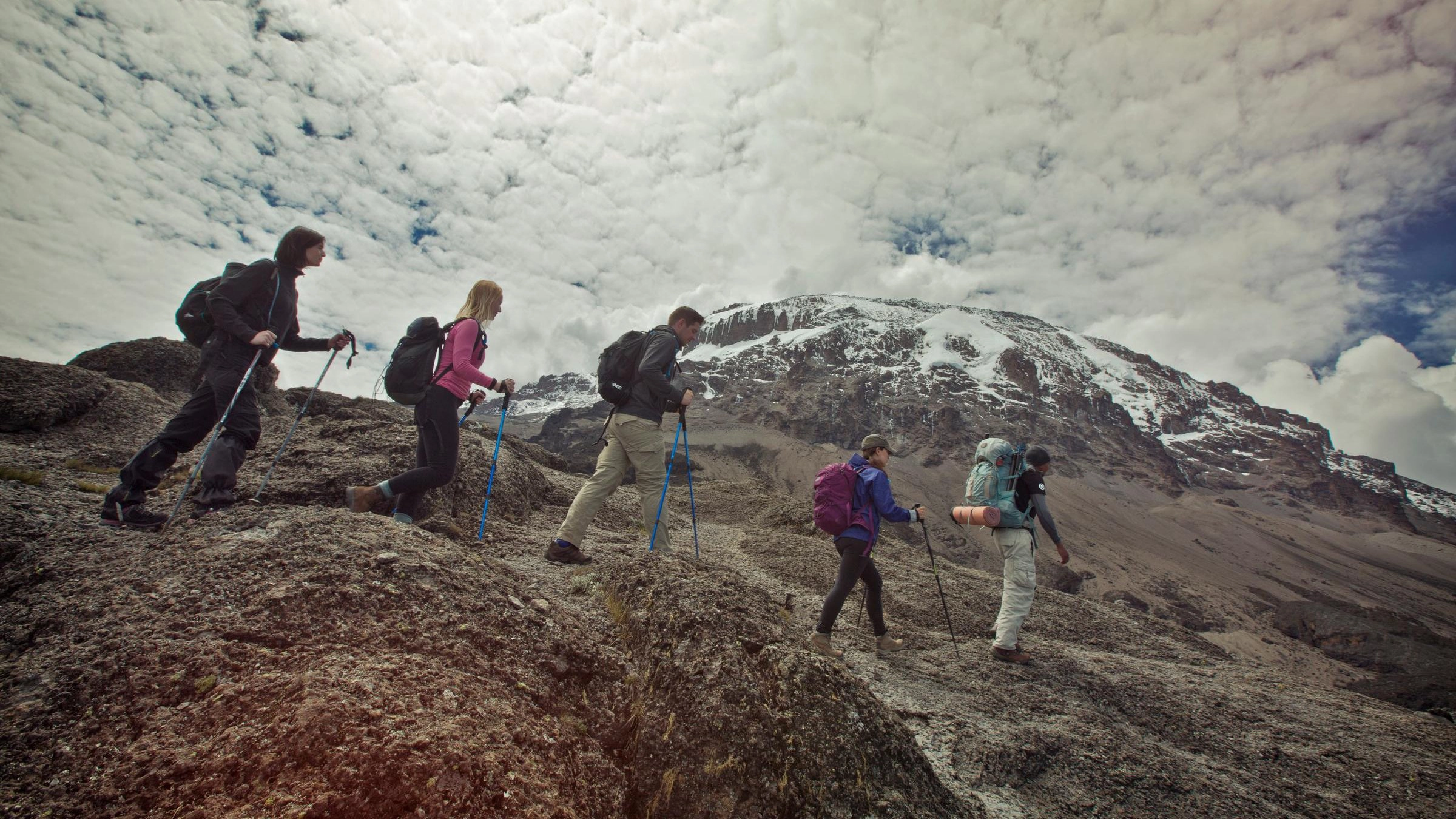
Tanzania: Kilimanjaro's Machame Route & Zanzibar Shores

-
Length
11 Days
-
Quality
This indicates the overall quality of the tour operator's products. A low rating does not mean it is not good - it just means that it does not include as much, or perhaps is of a more standard quality than the higher quality tours. For example, a 3 star quality rating means that it is a more standard/economical tour, while 5 stars is a very luxurious tour that often includes a lot of amenities. -
Starts in
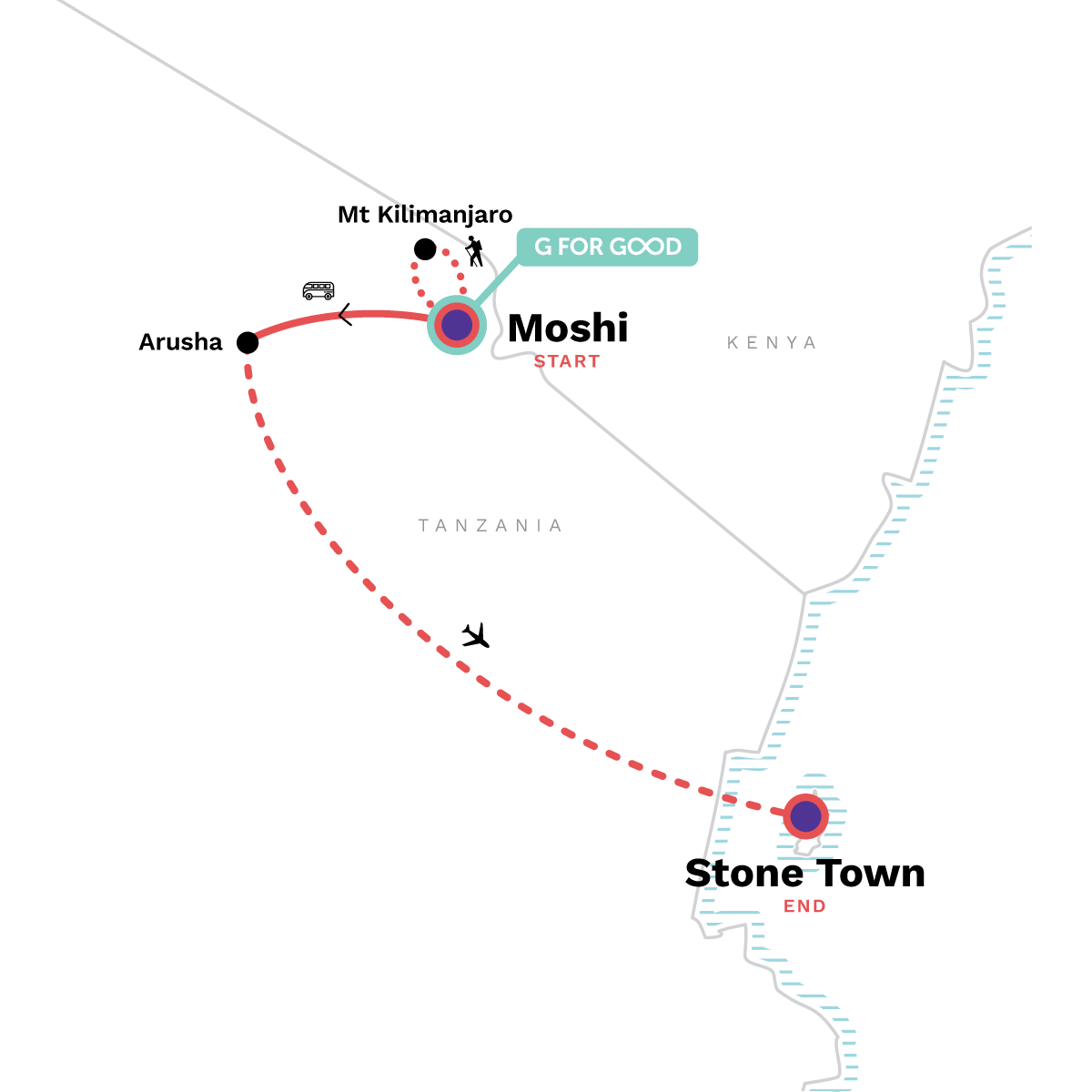
Moshi (Tanzania)
-
Ends in
Stone Town (Tanzania)
-
Available Tour Start Dates
JAN 2, 2027 to DEC 28, 2027
-
Activity Level
Challenging
-
Style
Fully-Guided
-
Guaranteed Date(s)
Yes means that there is at least one tour date that the vendor guarantees will occur. No means that there is not at least one tour date that the vendor guarantees will occur, which usually means that the vendor wants a certain amount of reservations on each tour in order for each one to occur. Of course, the terms and conditions of the vendor do allow for the vendor to cancel guaranteed tour dates for certain reasons (for example, a natural disaster).Yes
-
Special Interest(s)
Active
Hiking, trekking, biking, rafting, and kayaking adventures all over the world, made for outdoor types., Small GroupGroup trips average 12 travellers per departure, depending on the adventure. The maximum is usually no more than 16, but some can be smaller or bigger, depending on the trip. Check individual trips for details.
From
Pricing listed is per person, based on double occupancy, and is the least expensive price for at least one departure date of this tour. Price is for the tour only. Additional items, including but not limited to, airfare (unless noted otherwise), travel insurance, and more, are additional.
$4,199.00
Contact Us for a Special Price!
Overview
Eleven days. One legendary climb and a beach waiting at the bottom. The Machame Route - nicknamed the Whiskey Route for good reason - earns its reputation through forest, moorland, and glaciated ice fields on the way to Uhuru Peak. Then Zanzibar steps in with white-sand beaches and ocean breezes to remind you that the best adventures always end well.
Visited During Tour
Arusha (Tanzania) | Barafu Camp (Tanzania) | Barranco Camp (Tanzania) | Jambiani (Tanzania) | Machame Camp (Tanzania) | Moshi (Tanzania) | Mweka Camp (Tanzania) | Shira 2 Camp (Tanzania) | Stone Town (Tanzania)
Dates, Offers & Prices
Tour Itinerary
Accommodations
More Details
Dates, Offers & Prices
The following are Tanzania: Kilimanjaro's Machame Route & Zanzibar Shores tour dates available from G Adventures. Select a bonus offer graphic to view its details, including its terms.


Tour Itinerary
G Adventures Tour Code DTMA-11628
-
Day
1Moshi
Arrive at any time.
Exclusive Inclusions:
Meet Your CEO and Group
Your opportunity to meet your CEO and fellow travellers, and learn more about your tour. Opt to join the group for a local meal afterwards. Don't forget to see the notice in the lobby (or ask reception) for the official time and place to meet up with the group.
Accommodations: Stella Maris Executive Lodge -
Day
2Moshi/Machame camp
Hike the lower slopes of Mt Kilimanjaro to Machame Camp.
Most of the day is spent in the gorgeous and fascinating, forested slopes of Mt. Kilimanjaro, most of which is considered to be rainforest zone. Depending on the weather, the trail will be soggy and possibly muddy if it rains.
- Meals Included:
- Breakfast
- Lunch
- Dinner
Exclusive Inclusions:
Private Vehicle
Settle in and scan the scenery from the convenience of a private vehicle.
Machame Gate to Machame Camp
Start at the Machame Gate where the group will register and begin hiking. The slopes of Mt. Kilimanjaro are a rainforest zone, so trails can be wet and muddy. Keep a look-out for black and white colobus monkeys and exotic birds. On the first day of hiking the group covers a long distance with a gradual gradient. End the day at the Machame Campsite above the rainforest.
-
Day
3Machame camp/Shira 2 Camp
Hike through lower alpine moorland to Shira 2 camp and observe the spectacular views of Kibo Peak.
- Meals Included:
- Breakfast
- Lunch
- Dinner
Exclusive Inclusions:
Machame Camp to Shira 2 Camp
Start with a steep ascent towards the edge of the forest. Climb the steep ridge and stop for a break. Before reaching camp, continue hiking to Shira Cathedral and enjoy the view of the peaks.
-
Day
4Shira 2 Camp/Barranco Camp
Hike to Barranco Camp via Lava Tower. Enjoy the fantastic view of Western Breach and the Breach Wall.
- Meals Included:
- Breakfast
- Lunch
- Dinner
Exclusive Inclusions:
Shira 2 Camp to Lava Tower
Climb slowly through the rocky terrain to the Lava Tower (4600m, 15,092 ft) from the Shira 2 Camp. The route becomes increasingly challenging and steep. Some hikers might start to feel weak or short of breath from the altitude so go slowly- "pole pole" as they say in Swahili-to avoid exasperating the symptoms.
Lava Tower to Barranco Camp
Descend from the Lava Tower 650m (2133 ft) to the Great Barranco Valley. Hike about 2 hours to reach the valley, acclimate to the elevation and take in the view of the Western Breach and Breach Wall along the way. Reach the Barranco Camp and enjoy the beautiful landscape as a reward for the day's difficult hike. The Breach Wall surrounds the Camp on three sides and the area has an amazing view of hanging glaciers and the Kibo massif.
-
Day
5Barranco Camp/Barafu Camp
View the Great Barranco Wall and climb up the eastern wall, passing below the Helm Glacier.
- Meals Included:
- Breakfast
- Lunch
- Dinner
Exclusive Inclusions:
Barranco Camp to Barafu Camp
Take a look at the view of the Great Barranco Wall from camp then get ready to climb up the eastern wall. The route is a steady incline that passes below the Helm Glacier and meets with the Mweka route on the way down. Get some rest at the Barafu camp, the site is a on a narrow, rocky, ridge with no barriers to block the wind. Get equipment like headlamps, hiking poles and thermal clothing ready to go for the very early morning start the next day.
-
Day
6Barafu Camp/Mweka Camp
Hike during the night to the Summit via Stella Point. Watch the sunrise before descending to Mweka Camp.
The route from Barafu Camp to the summit is mentally and physically, the longest, most challenging day of the entire trek. Despite the difficulty, the memory of conquering Mt Kilimanjaro will stay with you forever.
- Meals Included:
- Breakfast
- Lunch
- Dinner
Exclusive Inclusions:
Barafu Camp to Stella Point
Wake up call today is at 11pm in order to reach Stella Point (5756m, 18,885 ft) in time for the spectacular view of the sunrise (depending on weather). Enjoy a snack and warm drink and get ready for the ascent in the dark up the northwest scree. Go slowly as the terrain is rocky and difficult, pass between the Rebmann and Ratzel glaciers before arriving at Stella Point.
Stella Point to Summit
Start the 1 hour, gradual ascent to Uhuru peak (5895m, 19341 ft) along the snow-covered trail. Temperatures near the summit can range from -23? C (-9?f) in the morning to just below freezing overnight. Arrive at the summit at last! Take a deep breath and celebrate a successful climb.
Summit to Mweka Camp
Begin the descent from the summit towards the Barafu camp, where the group will pack up and enjoy a quick rest. The route down will use the same rock and scree path as the ascent and will pass back through moorland and forest terrain. Reach Mweka hut in the late afternoon.
-
Day
7Mweka Camp/Moshi
Continue descent through the forested, lower slopes to Moshi. Meet the mamas of the Moshi Women's Cooperative, a G supported project, for a climbing ceremony.
Arrive to Moshi in the afternoon. Time to relax, take a shower, and celebrate with a drink. Cheers to climbing Mt Kilimanjaro! Before dinner, you will be welcomed and congratulated on your climb by the mamas of the Moshi Women's Cooperative, a project supported by G Adventures. They will present you with a gift and a certificate to remember all your efforts on the mountain.Opt to pre-book the Lala Salama Spa & Beauty Aromatherapy Massage, which partners with Moshi Women's Cooperative, by adding it to your checkout page, or ask your GCO or travel agent for assistance.
- Meals Included:
- Breakfast
- Lunch
Exclusive Inclusions:
Mweka Camp to Mweka Gate
Hike downhill to the Mweka Gate. Enjoy the lower altitude and the view of the forested slopes of Mt Kilimanjaro. The route can be muddy underfoot so take care. From the Mweka Gate you will continue down into the Mweka village for lunch, normally a muddy 1 hour hike. Upon arrival to Moshi in the afternoon, relax, or opt to have that much-deserved shower and congratulatory beverage.
Private Vehicle
Settle in and scan the scenery from the convenience of a private vehicle.
Moshi Women's Cooperative Visit
This project is supported by the Planeterra Foundation and G Adventures. Women and girls are often the first to be excluded from educational programs in Tanzania, with most girls being pulled out of school by Grade 3 to help out around the home. Our ground partners provide free adult business education for women in Moshi, and Planeterra and G Adventures have rented a cooperative space to allow these students to practice their academic skills and save income to start their own business. Feel free to shop for for souvenirs and speak to the women who run the cooperative about their lives and how the project has assisted in building a brighter future.
Accommodations: Stella Maris Executive Lodge1Optional Activities for Day 7
Show -
Day
8Moshi/Arusha
En route to Arusha, enjoy an included stop at the G Adventures-supported Moshi Women's Cooperative. Pick up any last-minute supplies in Arusha.
Travel to the picturesque town of Arusha. En route, stop at the Moshi Women's Cooperative to learn about what this project offers. Meet the women, learn more about their lives, and opt to purchase some souvenirs.In the evening, you may be joined by other G Adventures travellers arriving from Kenya or starting the safari portion of their Tanzania trip. Check for details of the time and location of a welcome meeting, typically around 18:00.
- Meals Included:
- Breakfast
Exclusive Inclusions:
Transport
Settle in and scan the scenery as you journey to your next destination.
Moshi Women's Cooperative Visit
This project is supported by the Planeterra Foundation and G Adventures. Women and girls are often the first to be excluded from educational programs in Tanzania, with most girls being pulled out of school by Grade 3 to help out around the home. Our ground partners provide free adult business education for women in Moshi, and Planeterra and G Adventures have rented a cooperative space to allow these students to practice their academic skills and save income to start their own business. Feel free to shop for for souvenirs and speak to the women who run the cooperative about their lives and how the project has assisted in building a brighter future.
Accommodations: Comfort Eland Hotel -
Day
9Arusha/Jambiani
After breakfast transfer to the airport in Arusha and board your flight to Zanzibar. Upon arrival enjoy an orientation walk of Stone Town before going to Jambiani. Grab lunch on your own and then take advantage of free time to settle into island life. There are plenty of local restaurants in the area for you to have dinner at your leisure this evening.
- Meals Included:
- Breakfast
Exclusive Inclusions:
Private Vehicle
Settle in and scan the scenery from the convenience of a private vehicle.
Plane
Look! Up in the sky! It's a bird! It's a plane! It's... yup, it is a plane, actually.
Stone Town Orientation Walk
This orientation walk is just a brief introduction. If you'd like to learn more in depth information about Stone Town, we recommended going on a guided city tour.
Private Vehicle
Settle in and scan the scenery from the convenience of a private vehicle.
Free Time
You'll have some free time late this afternoon and evening to get used to island life and slip into the relaxing vibes of Jambiani. Visit the stunning beaches and experience the fishing village atmosphere still present here with a big focus on local life over commercialized tourist areas.
Accommodations: Spice Island Hotel and Resort -
Day
10Jambiani
Head out on an included spice tour to gain a sense of Zanzibar's history and the spice plantations that brought the beginnings of the slave trade here dating back to the 1840s. The remainder of the day is free for you to do as you please. Perhaps, pre-book the snorkelling to witness the underwater life here off of Tanzania's coastline, or head to the nearby Jozani Forest for a tour. You can also simply relax on the beach and swim. Dinner this evening is at your leisure.
- Meals Included:
- Breakfast
Exclusive Inclusions:
Spice Plantation Tour
No visit to Zanzibar would be complete without a visit to the spice plantations. Your senses will be aroused as you will receive a detailed description on the assortment of spices (black pepper, cardamom, cinnamon, nutmeg, breadfruit, jackfruit, vanilla, lemon grass) and their various uses. It was the spice plantations that brought the beginnings of Zanzibar's infamous slave trade that dates back to the 1840's.
Free Time
Enjoy yourself on the island of Zanzibar. Choose to pre-book snorkelling or maybe go on a guided tour of Jozani Forest. Relaxing on the beach, working on your tan, and cooling off with a swim, is a great option too.
Accommodations: Spice Island Hotel and Resort3Optional Activities for Day 10
Show -
Day
11Jambiani/Stone Town
Enjoy breakfast at the hotel in Jambiani before your included group transfer back to the airport outside of Stone Town. You should arrive at the Zanzibar airport by 11:30AM where your tour ends. Please do not book onward flights prior to 2:30PM.
Please do not book onward flights prior to 2:30PM.
- Meals Included:
- Breakfast
Exclusive Inclusions:
Private Vehicle
Settle in and scan the scenery from the convenience of a private vehicle.
Departure Day
Not ready to leave? Your CEO can help with travel arrangements to extend your adventure.
Accommodations
Select a destination below to to view the hotel(s) included by G Adventures in their Tanzania: Kilimanjaro's Machame Route & Zanzibar Shores tour:
Arusha
Comfort Eland Hotel
Location
Mianzini Area, Arusha, Tanzania
Arusha, Tanzania
Other Details
- Hotel as shown or similar (G Adventures may replace it with a similar property)
Jambiani
Spice Island Hotel and Resort
Location
Main Road Paje
Jambiani, Tanzania
Other Details
- Hotel as shown or similar (G Adventures may replace it with a similar property)
Moshi
Stella Maris Executive Lodge
Location
Arusha-Himo Rd.
Mailisita
Moshi, Tanzania
Other Details
- Hotel as shown or similar (G Adventures may replace it with a similar property)
More Details
G Adventures is informing us of the following additional details regarding their Tanzania: Kilimanjaro's Machame Route & Zanzibar Shores tour:
Group Size
Max 14, avg. 10.
What's Included
Your G for Good Moment: Moshi Women's Cooperative Visit, MoshiYour Welcome Moment: Meet Your CEO and Group. 6-day guided group trek up Mt Kilimanjaro's Machame Route with local guides, cooks and porters. All permits and fees. Stonetown Orientation Walk. Spice Tour Zanzibar. Free time in Zanzibar. Internal Flight to Zanzibar. All transport between destinations and to/from included activities.
Highlights
Tackle the Machame Route - Kilimanjaro's most scenic and celebrated path, Trek through forest and moorland before glaciers and high-alpine deserts take over, Camp on the mountain and wake up closer to the stars than you've ever been, Stand at Uhuru Peak at sunrise and witness the curvature of the earth, Unwind on Zanzibar's white-sand beaches - you've more than earned it
Message from G Adventures About Travel Insurance
Travel insurance is compulsory in order to participate on any of our trips. When travelling on a group trip, you will not be permitted to join the group until evidence of travel insurance has been sighted by your leader, who will take note of your insurance details. When selecting a travel insurance policy we require that at a minimum you are covered for medical expenses including emergency evacuation and repatriation. A minimum coverage of USD200,000 is required. We strongly recommend that the policy also covers personal liability, cancellation, curtailment and loss of luggage and personal effects. Some tours include adventure activities that require extra coverage (e.g. crampon use); please review your itinerary and make sure that you are covered for all included activities. If you have credit card insurance we require proof of purchase of the trip (a receipt of credit card statement) with a credit card in your name. Contact your bank for details of their participating insurer, the level of coverage and emergency contact telephone number.
Optional Activities
G Adventures is offering the following optional activities at an additional cost, subject to availability:
Moshi- Lalasalama Spa & Beauty Aromatherapy MassageZanzibar- Zanzibar SnorkellingJozani Forest- Jozani Forest Tour (36-160USD per person)Jambiani- Swimming
What transportation will we take on this trip?
Land Transfers & Included Tours/activities: Many of the land transfers and included tours will be by private van, car or taxi, while others may be shared with other travellers depending on availability, nature of the activity and destination. Please note for your own safety it is mandatory to wear your seat belt at all times when in a vehicle.The journey from Arusha to Zanzibar will be by plane. This is not a physically demanding journey; however, travelling can be difficult, with long drives and poor road conditions at times. Please take note of the travel times and distances in the above itinerary, and consider that this is often on poor quality, bumpy roads. Despite this, most clients feel that the diversity of the African landscape, culture and wildlife are all well worth the experience.
Accommodation Summary
Hotels (5 nts), full-service alpine camping (5 nts).
Meals Included
10 breakfasts, 6 lunches, 5 dinners
What are the meals like on this trip?
This includes all meals while trekking on the mountain, along with breakfast back in Moshi on final day after your hike. All meals you have during your trip will be prepared from fresh local produce. Shopping for food will be done before the trip departs. Breakfasts and dinners will be served at camp, while lunches will tend to be packed to have en route while trekking. All evening meals will be hot and will consist of a variety of continental and local dishes. We believe that providing more than enough food while on such a trek is of the utmost importance, and as such you can be ensured that your cook and crew will provide enough quality food for you. Vegetarian meals and other dietary requirements need to be specified prior to arrival. Please note: bottled water (both before and after the trek) is at your own expense, however, during the Kilimanjaro trek you will be provided with drinking water. This water is collected from fresh mountain streams and then purified with tablets by your guides who will replenish your empty bottles/thermos flasks on a daily basis. For peace of mind, you are welcome to add your own chlorine or iodine tablets instead, if you are uncomfortable drinking the water provided.As mentioned above, many of the meals on this tour are included in the tour price. When a meal is not included, this is because there are often many options available - we would like to give you the opportunity to explore a bit and test the local cuisine yourself. In these cases, your CEO will be able to suggest some good local restaurants or options for you to choose from. All included meals will be prepared from fresh local produce. The majority of the shopping for foodstuffs will be done before the trip departs, and fresh goods, such as meats, fruits, vegetables, and dairy products, will be bought en route during the trip from supermarkets, local shops and markets. Breakfasts will generally consist of breads and cereals, if time allows a warm breakfast may be prepared. Many lunches will be provided en-route and will be light meals such as sandwiches and/or salads. All evening meals will be freshly-prepared hot meals, and will consist of a variety of continental and local dishes. Vegetarian meals and other dietary requirements need to be specified prior to arrival.Please note all bottled drinking water will be at your own expense.
Group Leader
Certified mountain guide throughout, local representative, cook, porters. CEO (Chief Experience Officer), certified safari guides/drivers, local guides while in Zanzibar.
What is the group leader like?
For your hike on Mt. Kilimanjaro, you will be lead by an experienced certified mountain guide. To round out the team, you will be joined by an assistant guide (for groups of more than one person), a cook, and a team of porters.Your guide has been trained in mountain guiding skills, first aid and emergency response, flora and fauna, and group management. All guides are licensed by KINAPA, the National Park Authority. Your cook is an experienced cook who will prepare a variety of nutritious, and hearty meals. As a general rule, each hiker will be accompanied by 2 porters, who assist in carrying both your bag and the team’s gear (tents, food, etc). Please note English is often the 3rd or 4th language of the Tanzanians in the area of Mt. Kilimanjaro, therefore your guide will speak a basic English. The porter will carry a maximum of 15kg of your belongings and 5kg of personal gear. All our Porters will carry a maximum of 20kg and there is a strict weigh in by the Kilimanjaro Park authority.This G Adventures group trip is accompanied by one of our group leaders, otherwise known as a Chief Experience Officer (CEO). The aim of the group leader is to take the hassle out of your travels and to help you have the best trip possible. They will provide information on the places you are travelling through, offer suggestions for things to do and see, recommend great local eating venues and introduce you to our local friends. While not being guides in the traditional sense you can expect them to have a broad general knowledge of the countries visited on the trip, including historical, cultural, religious and social aspects.
Transportation
Private minibus, trekking, private vehicles, plane.
Minimum Age
You must be 18 to travel unaccompanied on a G Adventures tour. For minors travelling with a guardian over 21 years old, the minimum age is 12.
Checklist
Cold weather:o Long-sleeved shirts or sweatero Scarfo Warm gloveso Warm hato Warm layersDocuments:o Flight info (required) (Printouts of e-tickets may be required at the border)o Insurance info (required) (With photocopies)o Passport (required) (With photocopies)o Vouchers and pre-departure information (required)o Visas or vaccination certificates (With photocopies)Essentials:o Toiletries (required) (Shampoo, bodywash, soap, etc.)o Binoculars (optional)o Camera (With extra memory cards and batteries)o Cash, credit and debit cardso Day pack (Used for daily excursions or short overnights)o Ear plugso First-aid kit (should contain lip balm with sunscreen, sunscreen, whistle, Aspirin, Ibuprofen, bandaids/plasters, tape, anti-histamines, antibacterial gel/wipes, antiseptic cream, Imodium or similar tablets for mild cases of diarrhea, rehydration powder, water purification tablets or drops, insect repellent, sewing kit, extra prescription drugs you may be taking)o Flashlight/torch (Headlamps are ideal)o Fleece top/sweatero Footwearo Hato Headphones (Noise-cancelling recommended)o Locks for bagso Long pants/jeanso Moneybelto Outlet adaptero Personal entertainment (Reading and writing materials, cards, music player, etc.)o Reusable water bottleo Shirts/t-shirtso Sleepwearo Small travel towelo Sunglasseso Swimwearo Watch and alarm clocko Waterproof backpack covero Windproof rain jacketHealth & Safety:o Face masks (Clients will be only be required to wear a face mask where it is mandated by local regulations.)o Hand sanitizero Pen (Please bring your own pen for filling out documents.)Kilimanjaro - Available for Rent:o Balaclava ($5 USD)o Camel bag (Water bag) ($15 USD)o Chamber ($200 USD)o Crampons ($40 USD)o Day pack ($30 USD)o Down jacket ($20 USD)o Duffel bag ($20 USD)o Fleece pants ($6 USD)o Fleece top/sweater ($10 USD)o Gaiters ($10 USD)o Gloves - Finger ($10 USD)o Gloves - Finger Liner ($5 USD)o Goggles - SKI ($15 USD)o Head Torch ($15 USD)o Mobile Toilet ($236 USD)o Oxygen ($118 USD)o Poncho ($20 USD)o Rain jacket / windproof ($15 USD)o Rain pant ($15 USD)o Rucksack cover ($10 USD)o Scarf or neck warmer ($5 USD)o Sleeping bag ((-25 to -35?C) $40 USD; If you are planning to rent a sleeping bag for your Mt Kilimanjaro trek, please let your booking agent know so that we can prepare your group leader.)o Summit Jacket ($20 USD)o Summit socks ($5 USD)o Sunglasses ($10 USD)o Sun hat ($15 USD)o Sweater ($10 USD)o Thermal top ($10 USD)o Thermal underwear ($10 USD)o Walking poles ($12 USD for two poles)o Walking trouser ($15 USD)o Water Bottle ($5 USD)Kilimanjaro - Other:o Electrolytes (Powder or tablets, optional)o Hand sanitizero Medication (Consult with your doctor about options to manage altitude sickness)o Metal/aluminum water bottle (This style of bottle can double as a heat source at night when filled with hot water. We recommend a Sigg-style bottle.)o Moisturizer/lip balmo Pee bottle and/or She-Wee (You can use these items to avoid having to leave the tent at night)o Reusable water bottle (Water bottles should carry up to 3 litres of water (minimum 2 litres); please note that this recommendation is made based off of the water intake of the average hiker, but may vary due to personal needs. We recommend platypus-type water bladders/camel backs made out of a material that will prevent water from freezing at high altitudes.)o Sunblocko Toilet papero Wet wipes (Recommended)Kilimanjaro - Technical Clothing:o Waterproof lightweight hiking boots (required)o Windproof rain jacket (required) (A breathable jacket, with a hood is recommended)o Balaclava (Optional)o Fleece jacket or warm layero Fleece pants ($10 USD)o Gaiters (Optional)o Hat (A hat with a brim is recommended)o Hiking pants (Convertible/Zip-off and quick dry recommended)o Insulated Jacketo Light gloveso Lightweight wicking shirtso Long-sleeved shirt for hiking (2 moisture-wicking shirts, and 1 breathable shirt recommended)o Quick-dry socks (Wool or synthetic)o Shorts (Optional)o Short sleeve t-shirt, light-weight, moisture-wickingo Slip-on sandals or shoes (Optional extra shoes to wear around camp)o Thermal underwear (Moisture-wicking fabric recommended)o Underwear (Moisture-wicking fabric recommended)o Warm gloves (Waterproof recommended)o Warm hato Waterproof pants (Pants with a side zipper recommended)Kilimanjaro - Technical Gear:o Day pack (30-35L - can be rented in location)o Drybag (Will help keep cameras and essentials dry)o Dufflel bag (50-90L - can be rented in location)o Sleeping bag and liner, 4 season (Sleeping bags can be rented for approximately $40 USD for the duration of the tour; if you are planning to rent a sleeping bag, please let your booking agent know so that we can prepare your group leader. Purchasing sleeping bags in Arusha might be more difficult to source.)o Walking poles (Highly recommended)Warm Weather:o Sandals/flip-flopso Shorts/skirts (Longer shorts/skirts are recommended)o Sturdy water shoes/sandalso Sun hat/bandanao SwimwearNote: A refillable water bottle/flask is required for the trek, no plastic or disposable bottles are allowed on the mountain and they may be confiscated prior to the hike.When packing your gear, the best clothing for trekking is either wool or synthetic materials, as this is quick-drying and can keep heat in better. The optimum clothing for trekking is layering, as it allows for easy temperature regulation as you ascend or descend. We suggest a base-layer, then a mid-layer such as a sweater, followed by a fleece jacket or similar, then a windproof and waterproof jacket. For your bottom half, thermal underwear, hiking pants then windproof and waterproof layers are recommended.You will be on the move a lot, so our advice is to pack as lightly as possible. Your baggage should be clearly labelled and restricted to one soft compact suitcase, sports bag, or backpack, no larger than 30cm(height) x 30cm(width) x 60cm(length), maximum 15kg, plus a day-pack (5kg).Below are the suggest sizes for both medium and large rucksacks with a maximum weight of 15kg.Medium Rucksacks: 48 Litre to 58LitreLarge Rucksacks: 60+ LitresThe climate in East Africa varies between the dry and rainy season. Please ensure you bring a windproof rain jacket if you are travelling between April & May, October & November.
Packing Note
A refillable water bottle/flask is required for the trek, no plastic or disposable bottles are allowed on the mountain and they may be confiscated prior to the hike.When packing your gear, the best clothing for trekking is either wool or synthetic materials, as this is quick-drying and can keep heat in better. The optimum clothing for trekking is layering, as it allows for easy temperature regulation as you ascend or descend. We suggest a base-layer, then a mid-layer such as a sweater, followed by a fleece jacket or similar, then a windproof and waterproof jacket. For your bottom half, thermal underwear, hiking pants then windproof and waterproof layers are recommended.You will be on the move a lot, so our advice is to pack as lightly as possible. Your baggage should be clearly labelled and restricted to one soft compact suitcase, sports bag, or backpack, no larger than 30cm(height) x 30cm(width) x 60cm(length), maximum 15kg, plus a day-pack (5kg).Below are the suggest sizes for both medium and large rucksacks with a maximum weight of 15kg.Medium Rucksacks: 48 Litre to 58LitreLarge Rucksacks: 60+ LitresThe climate in East Africa varies between the dry and rainy season. Please ensure you bring a windproof rain jacket if you are travelling between April & May, October & November.
Are there any additional packing suggestions I should consider?
As you will be trekking up Africa’s highest mountain, you will be passing through a number of different climate zones, and should pack to prepare for a number of extremes – hot and sunny, cool, cloudy, and misty, fog, rain (your first day you will be ascending through a section of rain forest), wind, and lastly snow and cold. You may experience one or all of these conditions in the same day on your trek. In the lowlands, temperatures in the shade can reach 35C, and in the highlands it will be below freezing, with possible rain and fog. The use of lightweight, breathable, easily removable layers of clothes works best to allow you to adapt to the local conditions. We recommend breathable, moisture-wicking fabrics made of wool or synthetic fibres. Cotton is not recommended for hiking as it does not allow for heat or moisture to enter or escape, and it will not dry once wet. Please note that is gets extremely cold near the top of Mt. Kilimanjaro, and you will begin hiking your final ascent to the summit at approximately midnight, and hike through the coldest part of the day. For this, in addition to several warm layers and good boots to grip as you climb over frozen scree, ice, and snow, you will need warm protection for your extremities – warm socks, gloves, and a warm winter hat. Cameras need to be protected against the severe cold weather either in warm pouch or the interior pockets of your clothing. A selection of lenses will aid the final results although weight and bulk will obviously influence your selection. For digital equipment and mp3 players, check with the manufacturer’s specifications for temperature range (especially battery life), water tightness, altitude range, and general hardiness.Please note that you have the option to rent a sleeping bag once in destination, or to pack your own. The cost will be USD$40 to rent a sleeping bag in destination.Lastly, Mt. Kilimanjaro is located only a few hundred kilometres from the equator, and at altitude, the sun’s affects are heightened. Use a hat, sunglasses, sun screen, and wear proper clothing to protect yourself from the sun, to reduce the risk of sunstroke. Please note, secure luggage and valuables storage facilities are available at your Moshi hotel while you climb. Your hotel in Arusha also offers storage facilities for any extra mountain gear/clothing that you do not require for the safari portion of the trip. With regard to the type of pack(s) to use, two packs would be useful:1. One larger pack (preferably a duffle bag) that will be carried by the porters inside large, canvas duffle bags. This pack should not exceed 15kg, and should be within the following dimensions: 30cm (height) x30cm (width) x 60cm (length)2. One smaller 30-35L pack (5kg) that you will carry containing your water, snacks and wet weather gear.Please note that binoculars are not provided on this tour. If you are interested in using binoculars, you must pack your own.Below are the suggest sizes for both medium and large rucksacks with a maximum weight of 15kg. Medium Rucksacks: 48 Litre to 58LitreLarge Rucksacks: 60+ Litres
When can I do my laundry on this trip?
Laundry facilities are offered by some of our hotels for a charge. There will be times when you may want to or have to do your own laundry so we suggest you bring non-polluting/biodegradable soap.
Service Level
Standard: Comfortable tourist-class accommodations with character; mix of public and private transport.
Pricing and availability are subject to change and must be confirmed by one of our travel advisors, who can contact the vendor to do so. Intra-vacation air (also referred to as internal air) is usually based on economy class seating (do not assume otherwise, unless explicity noted otherwise) and may be 100% non-refundable at time of final payment. Air quotes (including intra-vacation airfare) may be subject to change until final payment has been received by the vendor. Flight confirmation may be based on availability. Air reservations may not be able to be confirmed until a passport copy is received by the vendor. The following charges are not included in the vacation price unless otherwise noted: airfare to and from the start of your vacation; airline baggage fees including checked and/or excess baggage fees; Federal inspection fees for the Federal U.S. Customs and Immigrations; International Air Transportation tax; agricultural tax; other per person taxes imposed by government entities; airport taxes and fees, including the September 11th Security fee, passenger facility charges, Federal domestic flight segment fees, and U.S. and international arrival and departure and other government-imposed fees added by the airline and applicable at time of booking; port taxes; passports; visas and vaccinations; tips to your Cruise Director, Local Host, driver, Local Guides, and/or ship's crew; gratuities on ferries, trains, and cruise ships; laundry; telephone; minibar; alcohol, beverages, and food outside of the contracted menu as presented at a hotel or restaurant or onboard your vessel (these extra items will be billed to you before leaving the hotel, ship, or restaurant); airport transfers on non-qualifying flights; optional excursions; additional activities and excursions purchased online; porterage at airports and train stations; Travel Protection; and all other items of a personal nature. Itinerary details are provided by the vendor. Vendors may reserve the right to change itineraries, even on existing reservations. There may be instances where the name of a tour contains a tour length in it, but where there is a version of the tour that is a different number of days in length. You can check the true length of a tour by referring to the length value listed in association with that tour. Destination images displayed on this web page, some which are supplied by the related vendor and some which are not, are intended to simply give a general representation of the region of the world being visited during the tour. Such images are not necessarily of the exact areas being visited during the tour. Hotel details (including, but not limited to: rating/class, descriptions, images, amenities and addresses) are provided by G Adventures. Hotel amenities may be communicated in shorthand by G Adventures (for example, if "Laundry" is listed that may only mean that the hotel has an optional fee-based service that would allow for your laundry to be done by their staff). We reserve the right to correct errors.